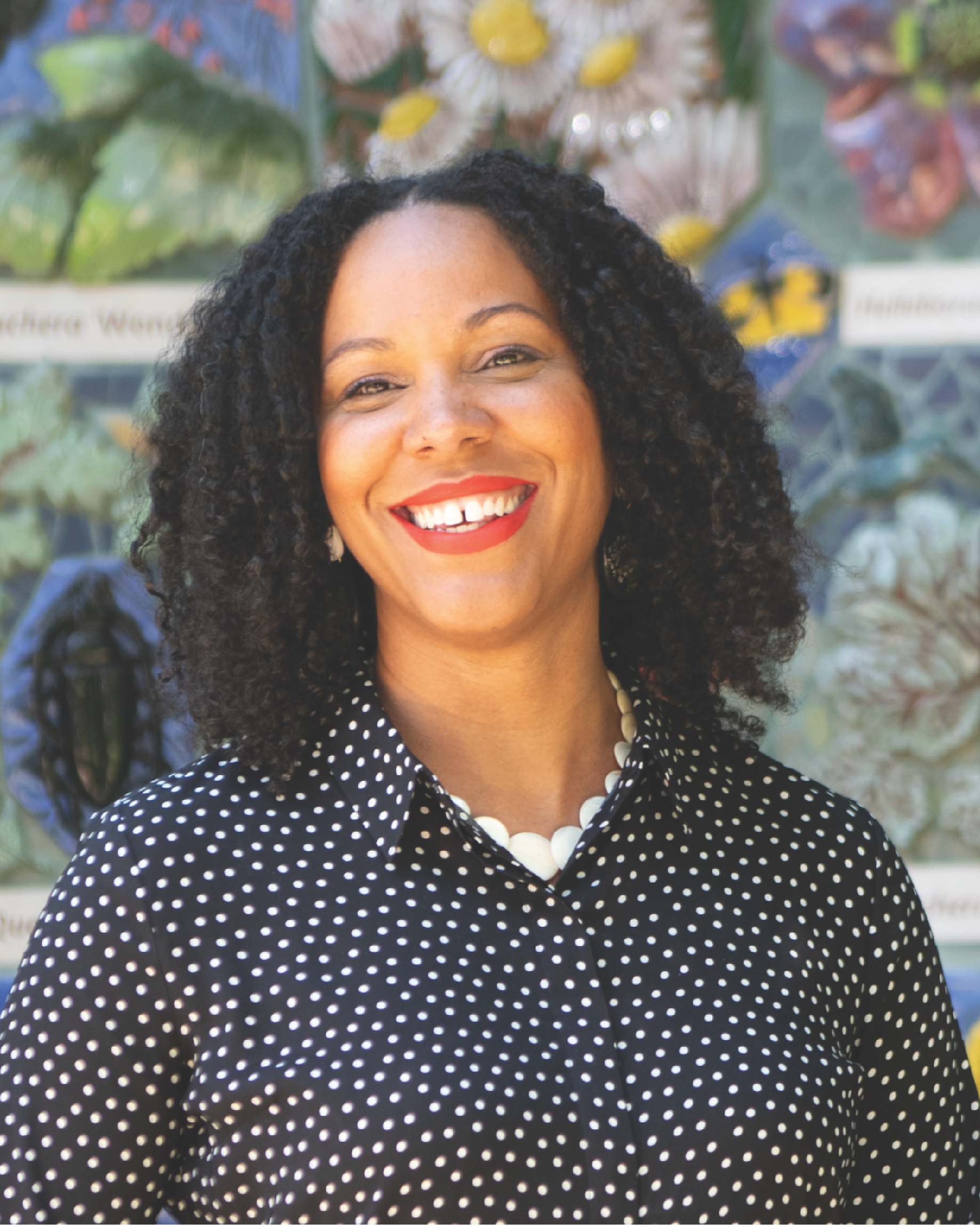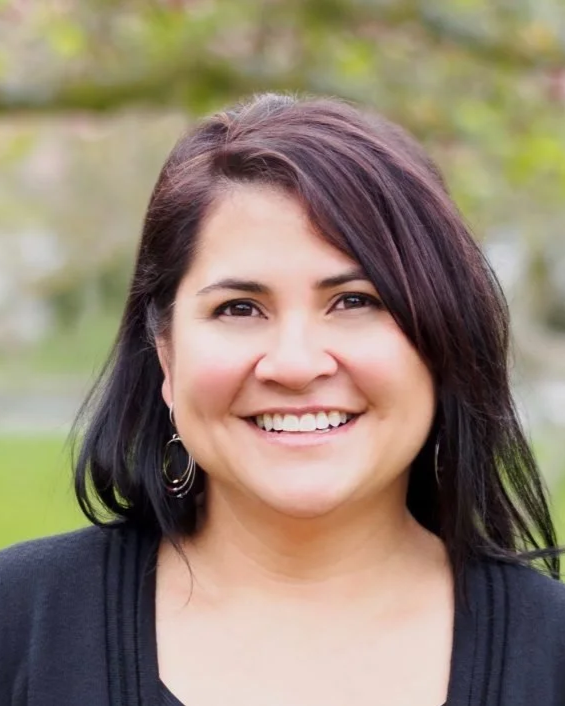
Dr. Diana Bautista
Eyeing her one Christmas present under the tree, a young Diana Bautista hoped it was the chemistry set she had picked out of the Sears catalog after long hours perusing the pages of toys. Instead, she unwrapped the QUICK CURL® Barbie Beauty Center, a large, blonde, blue-eyed Barbie head that came with a set of styling tools. Her loving family, wanting to nurture Diana’s creative nature, hoped the gift might nudge her toward a career she would enjoy, and one a bit more realistic than ‘chemist’ for a child living in inner city Chicago. Today, Dr. Diana Bautista is indeed thriving in a career that she loves and one that serves as a perfect outlet for the creativity that defined her childhood years. As a professor of Cell and Developmental Biology at UC Berkeley and an HHMI Investigator, Diana leads a lab working at the nexus of sensory systems and neuroimmunology.
Truthfully, Diana’s desire for the chemistry set was motivated not by any early affinity for science but instead by the ad itself, which promised that the set could be used to create a rotten egg odor to ward off siblings. In fact, Diana had always been drawn more towards the arts than the sciences, and she finished high school—the first in her family to do so—with the idea that she might want to go to art or beauty school afterwards. After a year of art school, however, she was hit with the double whammy of accumulating student loans and the realization that she might not have the talent necessary to make a career out of art. She dropped out and started working as a bartender at a blues club in Chicago. It was here that she discovered science.
Many of the bar’s regulars were heavily involved in the Greenpeace network, passionately fighting for environmental justice. Moved by their fervent discussions, Diana began volunteering for Greenpeace as well. At the time, a new hazardous waste incinerator was set to be built, and Diana was tasked with studying epidemiology and toxicology reports to understand the negative impacts of such facilities and figuring out how to communicate these dangers to the community. As she worked on this project, the feeling that she was making a real difference lit a spark in Diana: she wanted to learn more and do more. Diana enrolled in Malcolm X Community College, diving into science and math courses. To her surprise, she did well. One of her professors encouraged her to transfer to a four-year college and helped her look at programs related to toxicology. When Diana was accepted into an environmental science bachelor’s program at the University of Oregon, she was thrilled. She packed her bags and used what was left of her savings to travel from Chicago to Oregon by train.
When Diana arrived in Oregon, she discovered that the financial aid office was unable to cover her full tuition. Ever resilient, she stayed in Oregon and attended community college for a year while working. A year later, she finally entered the environmental science program. When she searched for work-study jobs at the university, however, she found nothing in the realm of toxicology and just two related to science at all: a job in a botany lab, and one in a neuroscience lab making fly food. As Diana had never had much luck keeping house plants alive, she applied to work in the neuroscience lab. She was intrigued anyway—why were people making food for flies, and what did it have to do with neuroscience?
The lab’s PI, Dr. Peter O’Day, took Diana under his wing. With his guidance, Diana received funding from HHMI and NIH programs for undergraduate research, moving beyond her job making fly food and diving into the research itself. The lab was studying light-evoked currents in photoreceptors, performing electrophysiology in the Drosophila eye. Diana was enamored by the experience, developing an interest in ion channels and sensory physiology that would become a driving factor throughout her career. Although she had fallen in love with neuroscience research, as graduation approached, graduate school was not a consideration—she couldn’t afford more school and had to find a full-time job. When Peter told her that graduate schools typically cover tuition and pay a stipend, Diana was floored. Maybe graduate school was a possibility after all. With Peter’s encouragement, she applied to neuroscience graduate programs and ultimately accepted an offer to join Stanford’s Neurosciences PhD program.
At first, Diana felt like a fish out of water at Stanford, and her imposter syndrome escalated. Having never attended a private institution, Diana was shocked at the money that was all around her, from the lavish, perfectly manicured flowerbeds throughout campus to the people themselves. She wasn’t sure what to wear to lab or how to act in classes. The fact that there was not a single woman among the faculty of the Department of Molecular & Cell Physiology compounded her uneasiness—the people who looked like her were on the janitorial staff, not the faculty. Noticing her struggles, her PI, Dr. Rich Lewis, encouraged her to take a summer course at Cold Spring Harbor Laboratory. This experience was revolutionary for Diana. Bonding with other trainees from all over the world, she finally felt as if she fit into a science family. This was a crucial step towards Diana being able to identify as a “scientist.”
Back in the Lewis lab, her confidence in her research blossomed as well. Her graduate work focused on calcium signaling in lymphocytes, also known as white blood cells. Calcium signaling is important in most, if not all, cells and drives different functions depending on the cell type. In lymphocytes, calcium signaling plays a key role in immune response, driving the release of inflammatory cytokines. Diana studied how lymphocytes maintain calcium ion homeostasis. She focused on the calcium release-activated calcium (CRAC) channel—now called Orai after its encoding gene—and its relationship with a calcium pump called PMCA. It was known that calcium ion influx through CRAC promoted calcium efflux through PMCA. However, in characterizing the interactions between CRAC channel and PMCA pump activity, Diana discovered additional complexities, finding that local calcium ion gradients (as opposed to total calcium ions in the cell) near CRAC channels were important for modulating PMCA efflux. These findings shed light on some of the ways that the duration and magnitude of calcium transients are regulated in lymphocytes, which in turn influences their immune functions.
As she neared the end of her PhD, Diana was not sure what she wanted to do next. Open to many career paths, she chose to do a postdoc in part to delay the looming career decision. Having spent over 6 years in a lonely, dark room recording the activity of one of the world’s lowest conducting channels, Diana knew that she wanted to use her postdoc to expand her skillset and broaden her horizon. She also knew that she wanted to do more sensory biology, which had piqued her interest during her time in the O’Day lab. She therefore joined Dr. David Julius’ lab at the University of California, San Francisco. The Julius lab and others had recently discovered TRPM8, a mechanosensitive ion channel activated by cold temperatures and menthol. However, this work had been done in cells in a dish, so TRPM8’s physiological relevance in sensory neurons in living animals was still undefined. Using primary cultured neurons, ex vivo preparations of intact sensory nerve fibers, and mouse behavioral assays that she helped design and build, Diana showed conclusively that TRPM8 is required for sensation of a wide range of cold temperatures in mice. In various other projects during her productive postdoc, Diana helped uncover the molecular mechanisms through which chemical compounds in several familiar foods and irritants—garlic, Szechuan peppercorn, wasabi, mustard oil, and tear gas—affect our sensory system.
While Diana was still far from confident that she could thrive as a PI, she applied to faculty positions and ultimately set up her lab at UC Berkeley. Diana’s dream for the Bautista lab was to understand fundamental mechanisms through which the body protects itself from insults like noxious temperatures or pressure, harmful plants, and pathogens. At the time, Berkeley had an infamous “five-year clock,” with tenure considerations starting after just five years. Diana tried not to give it too much thought, not wanting the anxiety to slow her down. Instead, she tried to use her startup money to do the coolest experiments she could think of. Her thought process was, “I’m probably going to fail, but I’m going to go out with a bang.” Diana did not fail—quite the opposite. The early lab made great strides in understanding acute itch and pain, including the major discovery that the ion channel TRPA1 mediates histamine-independent itch, a finding published in Nature Neuroscience just three years after she started the lab.
After Diana received tenure, she shifted her lab’s focus to the more complicated mechanisms of chronic itch and pain, mechanisms with a heavy immune component. Then, after becoming a full professor, Diana decided to expand her research program yet again. She joined labs with Dr. Ellen Lumpkin, a longtime friend and collaborator, who at the time was leading a lab at Columbia University, studying mechanisms of touch and pain in the skin. Together, Diana and Ellen wanted to create a group where creativity and curiosity-driven science were the driving forces of discovery. Although they explored multiple institutions as co-PIs, they ultimately chose to launch their joint lab at Berkeley, and Ellen moved across the country to join forces with Diana’s lab. In the SENse (Sensory and Epithelial Neuroscience) Lab at UC Berkeley, Diana and Ellen co-mentor most trainees but also have independent projects. They investigate three broad topics: touch mechanisms across diverse species, chronic itch and pain mechanisms, and sensory control of infection and inflammation (this last one inspired by the COVID19 pandemic).
In 2021, David Julius, Diana’s postdoc advisor, shared the Nobel Prize in Physiology or Medicine for the discovery of receptors that mediate temperature and touch—a body of work that Diana had contributed to during her time in David’s lab, particularly with her characterization of TRPM8. She was invited to join him in Stockholm for the Nobel Prize ceremony. Standing in a new silk dress in the presence of Swedish royalty, Diana was struck by how far beyond her wildest dreams this scene would have been for the child practicing hair styles on her QUICK CURL® Barbie in inner city Chicago, or for the former art student bartending in a blues club. She thought she might one day be designing fancy dresses, not wearing them. As it turns out, creativity is a core aspect not just of art, but of science as well. Diana has thrived by channeling her unbridled creativity into finding and answering the “next big question” in her field, helping to paint a clearer picture of how our sensory and immune systems interact.
Listen to Diana’s talk at SfN 2025 below!