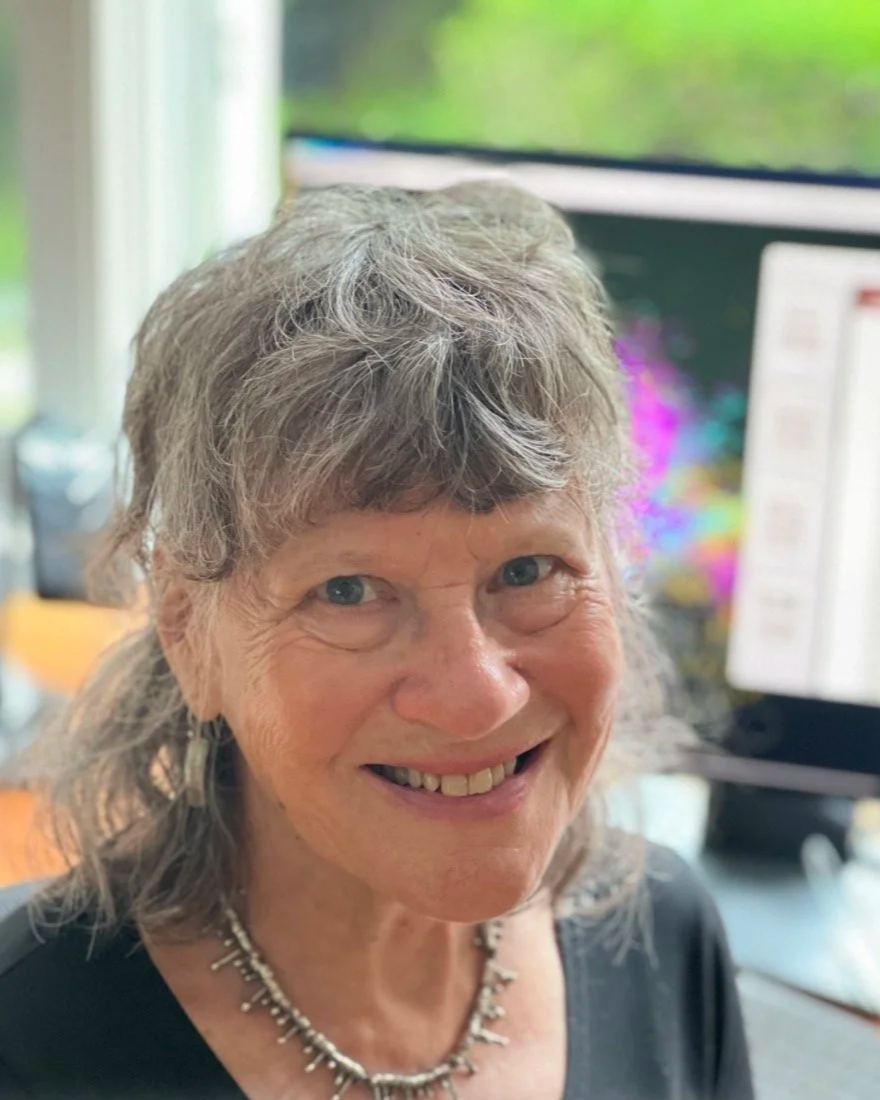
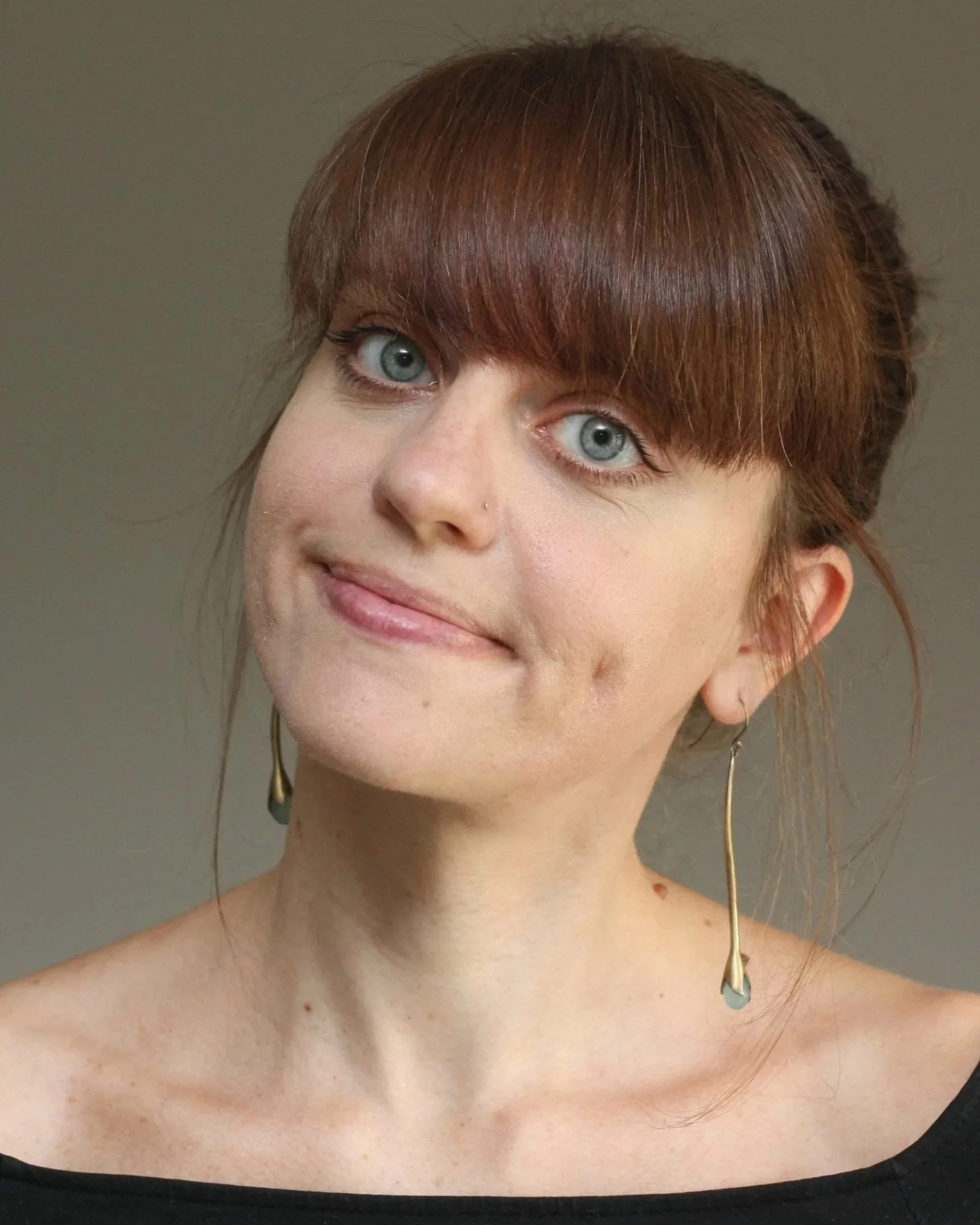
Dr. Megan Peters

Incoming Lecturer, University College London
Associate Professor, UC Irvine (till July 2026)
Postdoctoral Fellow, University of California Los Angeles
PhD, University of California Los Angeles
Few things feel more immediate than our own subjective experience as a thinking, perceiving being moving through the world, constantly interpreting and evaluating our thoughts. Many are drawn to philosophical questions about conscious experience, but how does one go about studying it empirically? Dr. Megan Peters has built a career combining cognitive science, mathematical modeling, and philosophy of mind to address these questions that have fascinated her since her teenage years. As an Associate Professor of Cognitive Sciences at the University of California Irvine and soon moving to University College London, Megan studies how brains construct internal models of the world that shape our perception, choices, and thought.
Megan went to Smith college wanting to study the “biggest unknowns” and to formalize conceptual understanding of complex phenomena using mathematical models. She quickly realized that her initial explorations into astrophysics didn’t really scratch the itch; rather, her introductory neuroscience classes led her back towards the inner space of the human mind. She transferred to Brown University to take advantage of a highly interdisciplinary program in cognitive science, combining classes in psychology, mathematics, computer science, and philosophy. After college, she considered clinical psychology programs to study how subjective experiences differ across people and how science might help address mental health challenges. While applying to graduate school, she spent a year in Japan teaching English and living abroad. But as she struggled to articulate the questions she wanted to pursue in her “statement of purpose”, she realized she needed more time to clarify her scientific goals. Back in the United States after an unsuccessful round of applications, Megan joined an infant language development lab at the University of Southern California (USC) as their lab manager. Watching babies absorb statistical regularities from the world, Megan realized that language learning was just one example of a broader computational problem: somehow the brain integrates information from many different sources to build a coherent experience of reality. That perspective became the foundation of her graduate work.
For her PhD at the University of California, Los Angeles (UCLA), Megan studied multisensory perception using Bayesian computational models. Her work focused on how the brain combines visual information with touch and proprioception to estimate properties of objects in the world. An everyday experience, like how heavy an object feels, is not a matter of sensing weight directly. Rather, the brain combines proprioceptive feedback from holding the object with our expectations based on what the object looks like and prior knowledge. Megan developed mathematical models to quantitatively describe this “knitting together” process through which distinct sensory signals become a unified perceptual experience.
As her graduate work progressed, Megan became increasingly intrigued by a deeper question. Building a model of the world, she felt, was not the same thing as being consciously aware of it. A self-driving car or a Roomba can integrate multisensory information and navigate adaptively, but as Megan says chuckling, “There’s nobody home.” What, then, transforms information processing into subjective experience?
That question motivated Megan’s postdoctoral work at UCLA, where she shifted toward studying metacognition. If perception builds a model of the world, metacognition asks how the brain evaluates that model: How certain am I? How reliable is my knowledge? How much should I trust my own judgment? To study the metacognitive computation of self-evaluation, Megan and her colleagues asked human participants to report their confidence level in addition to their decision in visual decision-making tasks. Their work revealed interesting mismatches between confidence judgments and sensory accuracy. People can perform well on a task while reporting low confidence, or perform poorly while feeling highly certain. Working with intracranial recordings from epilepsy patients, Megan showed that neural computations underlying confidence judgments differ from those underlying decision-making. Once a decision is made, information about alternative options fades away, and confidence estimates are biased by evidence supporting the decision. Confidence signals were also more widely distributed across the brain and emerged later in time. The findings suggested that subjective certainty is not an automatic byproduct of perception, but an additional layer of evaluation imposed on our internal models.
When Megan was in her third year of postdoc and still actively developing multiple new projects, she came across a faculty job opening at UC Riverside for an interdisciplinary program in neuroscience, psychology, and bioengineering. The position sounded too exciting to pass up and Megan applied without much expectation. To her surprise, she was offered the job and effectively started with a “negative runway”: her official start date preceded her signing the offer letter. With little time to prepare for the new role, the transition was quite stressful as Megan navigated the new responsibilities, planning classes, recruiting students, and buying equipment. Choosing bioengineering as her home department pushed her further outside her comfort zone but ultimately led to a broader integration of approaches from engineering and computer science. In 2020, Megan moved her lab to the Cognitive Sciences department at UC Irvine, which offered close links with their Logic and Philosophy of Science department, and where she was later granted tenure.
Today, her lab broadly studies how intelligent systems—both minds and machines—monitor and model their own knowledge, and how they use that uncertainty to guide behavior. Megan is optimistic that building theories of metacognition will provide a path toward experimentally testable explanations of subjective experience. She actively seeks trainees with diverse backgrounds and a willingness to think across disciplinary boundaries. Her ideal lab culture is one in which people challenge one another, build something neither could create alone, and avoid becoming intellectual copies of the mentor.
Alongside her scientific research, Megan has become widely known as President and co-founder of Neuromatch Academy, a global nonprofit initiative designed to make computational neuroscience education accessible worldwide. The project began in 2020 after the COVID-19 pandemic led to the cancellation of in-person summer schools. What started as an improvised online alternative rapidly grew into a massive international effort spanning time zones, languages, and continents. Megan and many other volunteers worked nights and weekends to make Neuromatch possible. At a time when the pandemic left people feeling isolated and untethered, that collective effort and enthusiasm became deeply meaningful to her. Today, Neuromatch Academy provides lectures, coding exercises, and collaborative projects to thousands of students around the world, with a strong emphasis on inclusion, financial accessibility, and open access. It also undertakes many community-building initiatives, including accelerator and fellowship programs. Seeing the global neuroscience community continue to sustain the program, driven by a shared aspiration to democratize science, remains one of the most inspiring and unexpected rewards of Megan’s career.
Now preparing for a move to University College London (UCL), Megan is entering a new chapter in her career. She originally applied to other universities, as many academics do, to get leverage in negotiations with her home institution. But when she got the job at UCL, with its concentration of cognitive science, computational neuroscience, and neuroimaging expertise, she knew it was an unparalleled environment for the kind of interdisciplinary work she loves to do. After building a life in California over two decades, the decision was difficult, but she knew that passing on the opportunity would leave a lasting sense of uncertainty: wondering what might have been.
As artificial intelligence systems become increasingly embedded in everyday life, Megan believes cognitive scientists have a responsibility to help “calm the waters” around public conversations about AI—bringing nuance to discussions often dominated by hype or fear. Across her research, teaching, and leadership, she returns repeatedly to the idea that human experience is defined not just by perception or knowledge, but by our relationship to our own knowledge.
Find out more about Megan and her lab’s research here.
Listen to Melissa’s full interview with Megan on December 5, 2025 below!