Dr. Laureline Logiaco
Assistant Professor, University of Colorado Anschutz
Simons Fellow and Research Scientist, MIT
Postdoctoral Fellow, Columbia University
PhD, University Pierre and Marie Curie
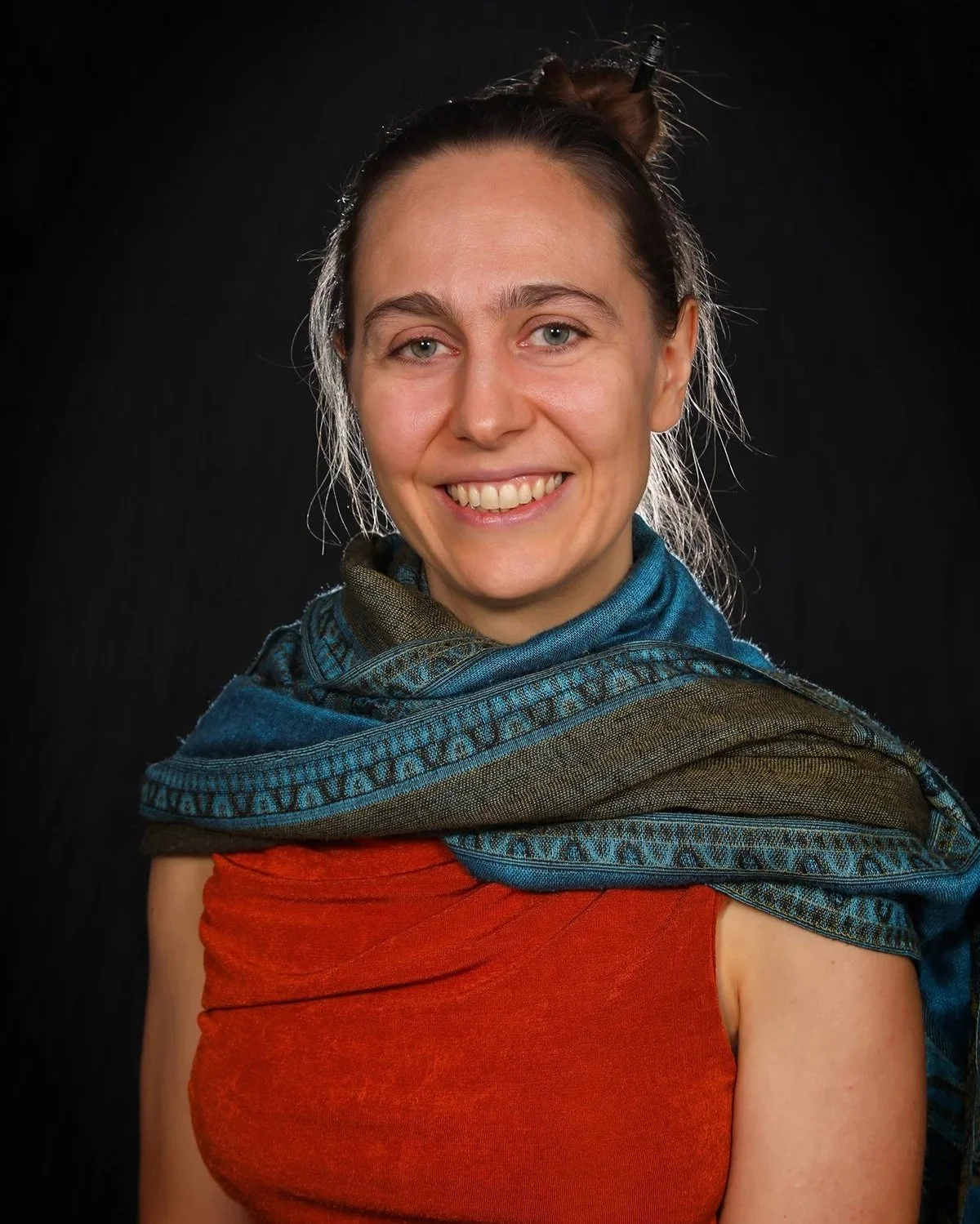
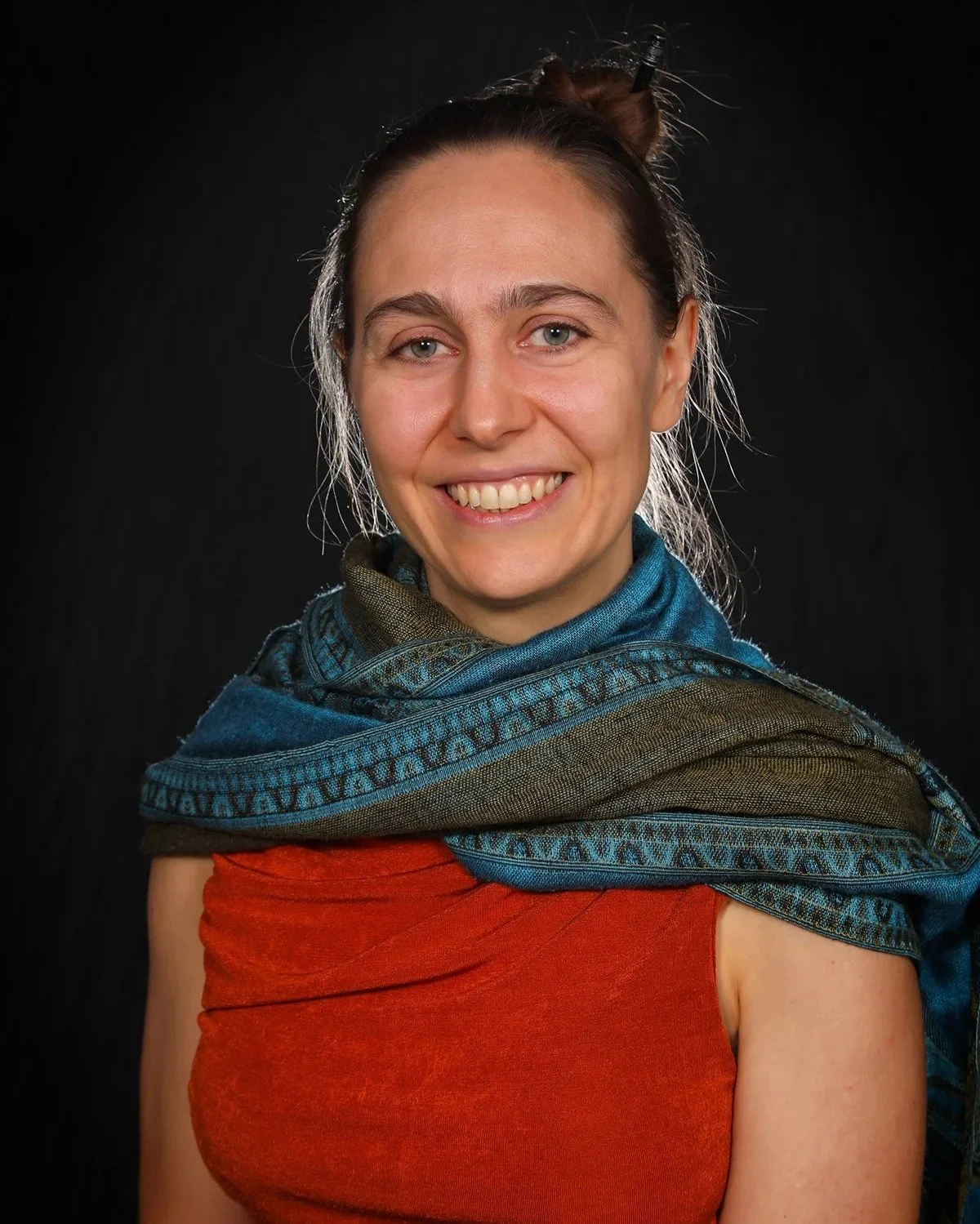
Even after a decade in theoretical neuroscience, Dr. Laureline Logiaco felt that she still had so much more to learn. There was always another skill to acquire, another gap in her knowledge to fill, another opportunity to become a better scientist. Gradually, she has come to accept there is no magical threshold to cross after which one “belongs” in academia. Today, Laureline is an Assistant Professor at the University of Colorado Anschutz, where her team builds computational models to understand how different brain regions work together to learn and produce complex movements.
While preparing for university entrance exams in France, Laureline was naturally drawn to the quantitative disciplines. But not feeling entirely confident that she was “good enough” in math or physics, she decided to combine those courses with biology for her undergraduate degree. She soon discovered that she actually enjoyed building mathematical models of processes within living systems, models whose inner workings she could understand and manipulate. She continued at École normale supérieure (ENS), Paris for a masters in computational and cognitive neuroscience due to its international and active computational neuroscience community. While not everyone was equally welcoming—a theory group turned her away as her degree title wasn’t explicitly “Physics”, never mind her actual training— she did get research experience working with Drs. Christian Machens and Sophie Deneve on spiking network models of decision-making. Engaging with contemporary research, reading all the latest papers, “it got me hooked,” Laureline says. She went on to pursue a PhD with Dr. Angelo Arleo in Paris, co-advised by Dr. Wulfram Gerstner at EPFL in Switzerland.
For her PhD, Laureline studied how information is encoded in neural activity: whether it is mainly in how much or how little a neuron fires, or if the precise spike timing also matters. She started off on a data analysis project, analyzing recordings from the anterior cingulate cortex as monkeys performed a decision-making task with switching rules. She showed that the precise spatiotemporal patterns of neural spiking carried information about outcomes of past choices, which the monkeys used to adapt their choices. While the mathematical analyses revealed interesting structure in neural activity, Laureline wondered what this implied for its impact on downstream neural circuits, and what biological processes generated this structure in the first place. She obtained a grant to pursue some of these theoretical questions at Gerstner's lab at EPFL. But she encountered a more fundamental frustration: relatively little was known about the precise functions of the higher-order brain regions she was studying. Without a clear understanding of what those circuits were supposed to accomplish, it was difficult to build models to explain the function of observed spiking patterns.
Laureline therefore decided to shift toward studying the motor system for her postdoc, where the relationship between neural activity and behavior seemed more tractable. She joined Columbia University in New York, to learn from its large research community at the Center for Theoretical Neuroscience. She became interested in a fundamental problem in motor control: how does the brain string together a sequence of simple movements, like motifs in a dance, into a seamless, continuous, complex movement? And how does it flexibly combine these elements to create new, arbitrary movement sequences, without any training? Working with Drs. Sean Escola and Larry Abbott, Laureline developed an elegant computational model proposing how three interconnected regions—the basal ganglia, thalamus, and motor cortex—might cooperate. The basal ganglia typically exerts strong inhibition over thalamic neurons. By releasing this brake from a tiny subset of thalamic neurons, it could effectively control which groups of neurons in the thalamus were allowed to reciprocally interact with the motor cortex, and produce a particular element or “dynamical motif” of cortical activity. Like a conductor directing musicians in an orchestra, the basal ganglia could flexibly switch these parallel thalamocortical loops on and off in rapid succession, producing any number of complex movement sequences without rewiring the underlying circuitry.
It was particularly satisfying to Laureline to further use this model to explain a seemingly unconnected set of biological observations. But the project also embodied her philosophy toward computational modeling. She is drawn to bottom-up, tractable models that can be taken apart, manipulated, and analyzed mathematically to build strong theoretical foundations for understanding network computation. Unlike fitting models to data directly, these models may not reproduce experimental findings in precise quantitative detail. But they can reveal organizing principles and provide a conceptual framework for interpreting complex neural data. An important part of this process is deciding what biological details, or “structure”, to incorporate from the start—such as how different brain regions are connected—but also what to leave out. Which experimental “facts” are reliable enough to constrain a model? Which details are essential, and which might limit its ability to explain something new? As Laureline puts it, with characteristic humor, “Structure is good, except when it's wrong. And it's more often wrong than right.” Building models, then, is as much an art as a science, requiring researchers to exercise their own intuitions and judgment.
Laureline wanted to further develop her ideas of multi-region computation, but after six years as a postdoc at Columbia, she was ready for a change. She started a second postdoc in Ila Fiete’s lab in Boston supported by a Simons Foundation Transition to Independence Award, partly to add new machine learning skills to her repertoire, and to join her partner who was based at MIT. As a senior postdoc, Laureline spent multiple years applying to faculty positions and is candid about how difficult, and occasionally demoralizing, the process can be, with so many more aspiring, qualified researchers than available positions. The two-body problem with a partner also on the academic job track made it even harder. She had long assumed that if she proved herself through learning, working hard, and publishing good science, opportunities would naturally follow. Only gradually did she appreciate how much of science was also a "sociological endeavor”. Academic careers depend not only on technical competence but also on relationships, shared interests, and finding people who value one another’s ideas.
Laureline’s perseverance eventually paid off and she joined University of Colorado Anschutz as an Assistant Professor in 2025, followed by her husband a year later. Her lab builds multi-region models of distributed computation to understand how hierarchically organized behaviors are learned, sequenced, performed, and corrected. The brain, she points out, is not "a soup of everything wired together," but that doesn’t mean that brain regions are working independently or in a simple feedforward chain. Differences in circuit architecture, connectivity, and learning mechanisms can provide important clues as to what roles different regions play and how they cooperate for system function to emerge. She is also finally closing the loop to bring the models closer to data. For example, the seamless nature of many of our everyday, naturalistic movements makes it hard to parse out the distinct “motifs” that make up a movement by looking at the behavior alone. But the models she built during her postdoc had predicted an identifiable signature in thalamic activity at the otherwise invisible borders between these motifs, which her team is now testing alongside her experimental collaborators. Her modeling philosophy turned out to be very helpful here; a purely data-driven model may have reproduced all the recorded activity and explained what is happening without revealing why that signature was important.
After years of moving between countries and institutions and repeatedly rebuilding her personal and professional networks, Laureline is excited to have found her intellectual home and to establish her own lab community. Looking back, she wonders whether some of the “unwritten rules” such as needing a particular degree or skill on your resume, or needing to work abroad, “preferably the US,” as she was told on her first day of undergrad, were ever as necessary as they were purported to be. She recognizes how much she learned from these experiences, but muses whether she might have done just as well had she chosen otherwise. There are no easy answers, but she hopes that trainees will remember to consider what expectations are worthwhile—and which are worth questioning.
Find out more about Laureline and her lab’s research here.
Listen to Harsha’s full interview with Laureline on April 13, 2026 below!