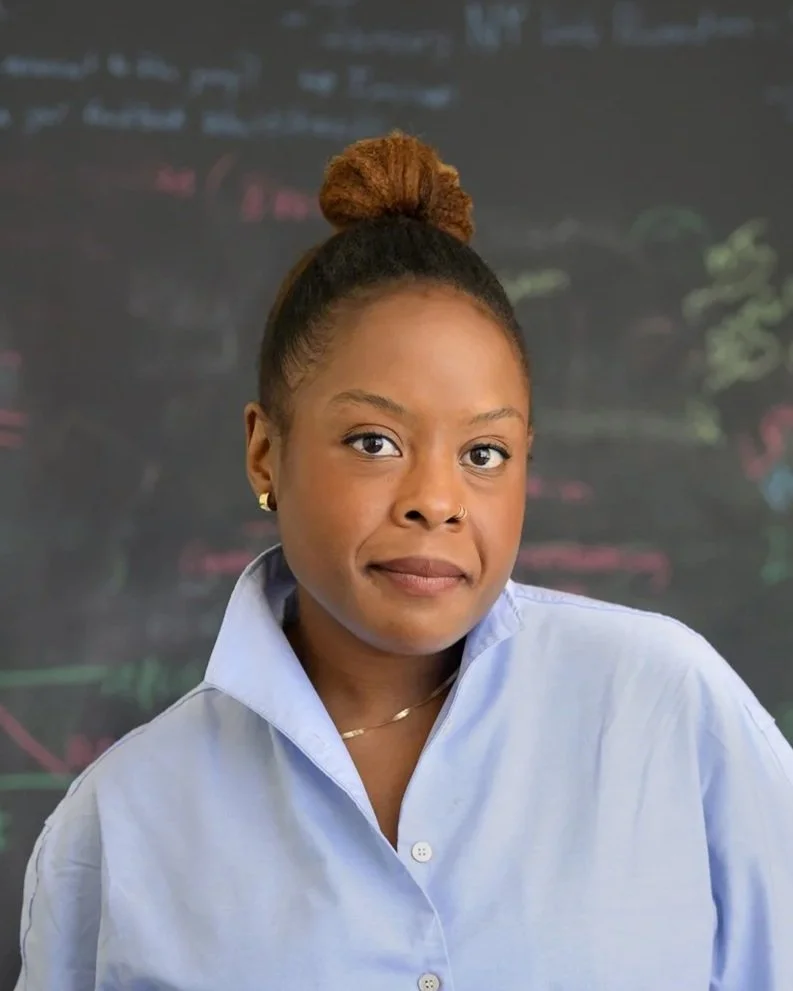
Dr. Zuri Sullivan
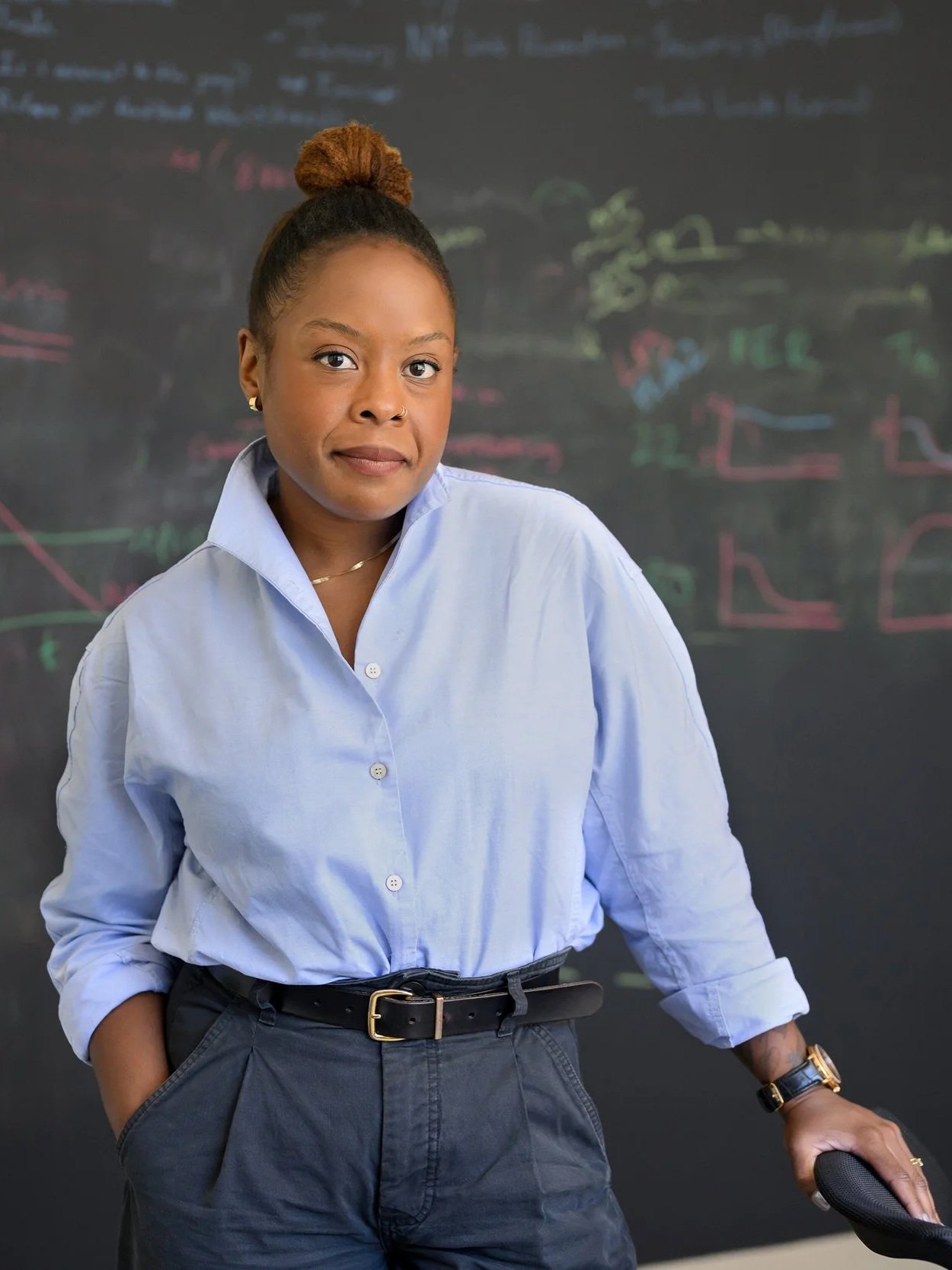
Whitehead Career Development Professor & Assistant Professor Biology, MIT
Postdoctoral Fellow Harvard University
PhD Yale University
As a high school student in Maryland, Zuri Sullivan was the only student in her AP biology class who attended a STEM outreach event at the Howard Hughes Medical Institute (HHMI). There, she heard immunologist and clinician Dr. Bruce Walker describe his pioneering study of HIV “elite controllers”, rare individuals living with HIV who could spontaneously suppress replication of the virus without medication. This talk sparked Zuri’s lasting fascination with host defense, the ability of individuals to protect themselves from pathogens. She has since explored host defense through the lenses of immunology and neuroscience. Today, Dr. Zuri Sullivan is an Assistant Professor of Biology at MIT and Member of the Whitehead Institute for Biomedical Research, where her lab bridges these fields to study how and why infections make us sick.
Zuri majored in molecular and cellular biology as an undergraduate at Harvard, where she joined Dr. Eric Rubin's lab to study the bacteria that causes tuberculosis. Through her research and inspiring professors, Zuri became further captivated by immunology, though she still felt confused about how this interest would play out as a career. She considered pursuing an MD/PhD, but clarity finally came to her in Durban, South Africa, where her post-bac Fulbright Scholarship brought her to study human immunity to HIV and tuberculosis. Her team collaborated closely with clinicians who provided them with both samples and insightful patient observations. In time, Zuri realized that she felt more drawn to immunology research than patient care, and that studying human immunology did not require also being a clinician. Instead of splitting her time between science and medicine, she could focus on the science and create collaborations with thoughtful clinicians such as those she met in Durban. After two years working in South Africa, she returned to the U.S. to pursue a PhD in immunobiology.
Studying tuberculosis drew Zuri to barrier tissues, such as the lungs and gut, which take in the air and food we need while also keeping out the harmful pathogens that may come with them. She brought this interest to Dr. Ruslan Medzhitov's lab at Yale for her PhD. Zuri started with an exciting project on how bacteria in the microbiome can live in tissues without being attacked by the immune system. However, nearly four years into the project, she realized she couldn't execute the final mechanistic study the way she had envisioned. Uncovering the mechanism required germ-free mice, raised without the microbes that normally colonize the body—a model that did not yet exist in the Medzhitov lab—and she was not yet independent enough to establish it herself. Meanwhile, Zuri’s friends were beginning to defend and publish their research, which left her feeling insecure about her own progress. The decision to abandon her microbiome project came gradually, and by the end of her fourth year in graduate school she presented a completely different project at her department's annual talk. Zuri still feels some sadness that this first project was never finished and still hopes one day to return to it.
As she moved away from her microbiome project, her PI, whom Zuri describes as a brilliant mentor with endless ideas, suggested she examine nutrient transporters in the gut, using many of the tools and skillsets she had established in her first project. Zuri found that the levels of enzymes and transporters responsible for digesting and absorbing carbohydrates changed depending on dietary carbohydrate levels. When she depleted γδ (gamma-delta) T cells, a type of immune cell, the diet-driven changes in nutrient uptake disappeared. Zuri concluded that the immune system helps direct how the gut absorbs food. She went on to discover the mechanism: γδ T cells help control levels of a signaling molecule called IL-22, which in turn controls the amount of carbohydrate-processing machinery present in the intestinal lining.
When her PhD lab shut down due to the COVID-19 pandemic in 2020, Zuri had to pause working on the revision experiments for her paper. During this time, she co-wrote a perspective piece with two postdocs in the lab that examined food allergy through an ecological and evolutionary lens, linking gut defenses against food-borne toxins with behaviors that steer animals away from dangerous foods. Behavior, she realized, was becoming increasingly important to her questions about host defense. This curiosity had already started to creep in at the bench, where Zuri had wondered whether the different diets affected the mice’s food preferences. Host defense, as she came to understand, plays out at every level of biology, from single cells to tissues to the whole organism, including that organism’s behavior. To study host defense more holistically, Zuri needed to delve into brain and behavior. She eventually returned to the bench to finish her revisions, while eyeing postdoctoral labs in neuroscience.
When applying for postdocs, Zuri assumed that neuroscience broadly encompassed the study of the brain and behavior. It was only during interviews that she realized much of neuroimmune research focused little on behavior. That realization led her to seek out systems and behavioral neuroscience labs with emerging interests in the immune system; places where she could bring her expertise as the resident immunologist. She ultimately joined Dr. Catherine Dulac's lab at Harvard and was awarded a competitive HHMI Hanna H. Gray Fellowship for her proposal to study sickness behavior: the highly conserved and stereotyped changes in physiology and behavior that accompany an infection, including fever, loss of appetite, and social withdrawal. Most research on sickness behavior uses lipopolysaccharide (LPS), a bacterial surface molecule that causes an immune response without being pathogenic. However, with Zuri’s immunology background, she knew the immune system mounts unique responses to different pathogens. Does the brain distinguish between pathogens too? Is sickness behavior displayed differently depending on the pathogen? Using a range of models mimicking bacterial, viral, allergic, and parasitic infections, and colitis, Zuri found that each pathogen mimetic produced a distinct repertoire of behavioral and physiological changes in mice. Brain-wide maps of the activity marker Fos were so distinct that a classifier could predict an animal's immune state from brain activity alone. Zooming in on the medial preoptic area of the hypothalamus, which governs core aspects of social and homeostatic behaviors affected during infection, she used spatial transcriptomics to reveal cell type- and pathogen-specific responses. The brain, as it turns out, knows what kind of sick you are, and directs you to act accordingly.
In January 2026, Zuri launched her lab at the MIT Whitehead Institute. Her lab’s research is moving from pathogen-mimicking molecules to real pathogens, asking how brain-immune communication helps animals survive infection. Take fever: it is highly conserved and widely assumed to be protective, but whether the brain's control of fever helps fight infection, and how, remains unclear. Some sickness behaviors may be features, others bugs, and some may even be triggered by pathogens for their own benefit. If you block fever, does viral load rise or fall? Does the animal survive? To find out, Zuri is approaching host-pathogen interactions as an immunologist wielding a vast neuroscience toolkit.
Running a cross-disciplinary lab has its challenges. Since no single colleague, or even department, can weigh in on all aspects of her research, Zuri pieces together expert advice from across the MIT campus and beyond. Back in the lab, she finds another kind of expertise in the collective knowledge and synergy of her team. She relishes the generative process of brainstorming, which fosters ideas none of them would have arrived at alone. Outside the lab, Zuri runs, draws, and hosts monthly dinner parties, bringing groups of friends together for lively discussion. It’s a fitting hobby for a scientist whose career has been built on bringing different systems together and seeing what happens when they start talking.
Find out more about Zuri and her lab’s research here.
Listen to Nancy’s full interview with Zuri on May 28, 2026 below!