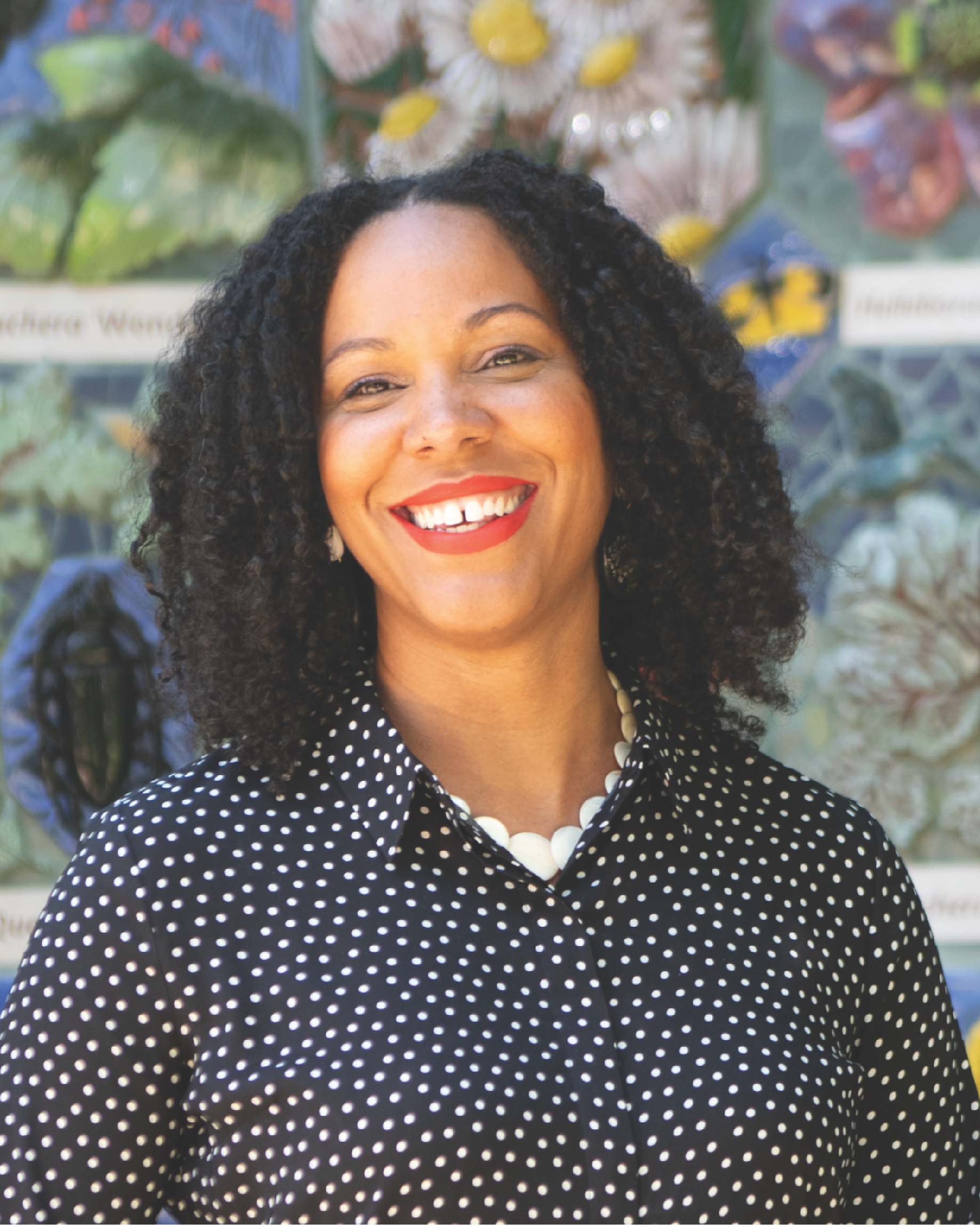
Dr. Theanne Griffith
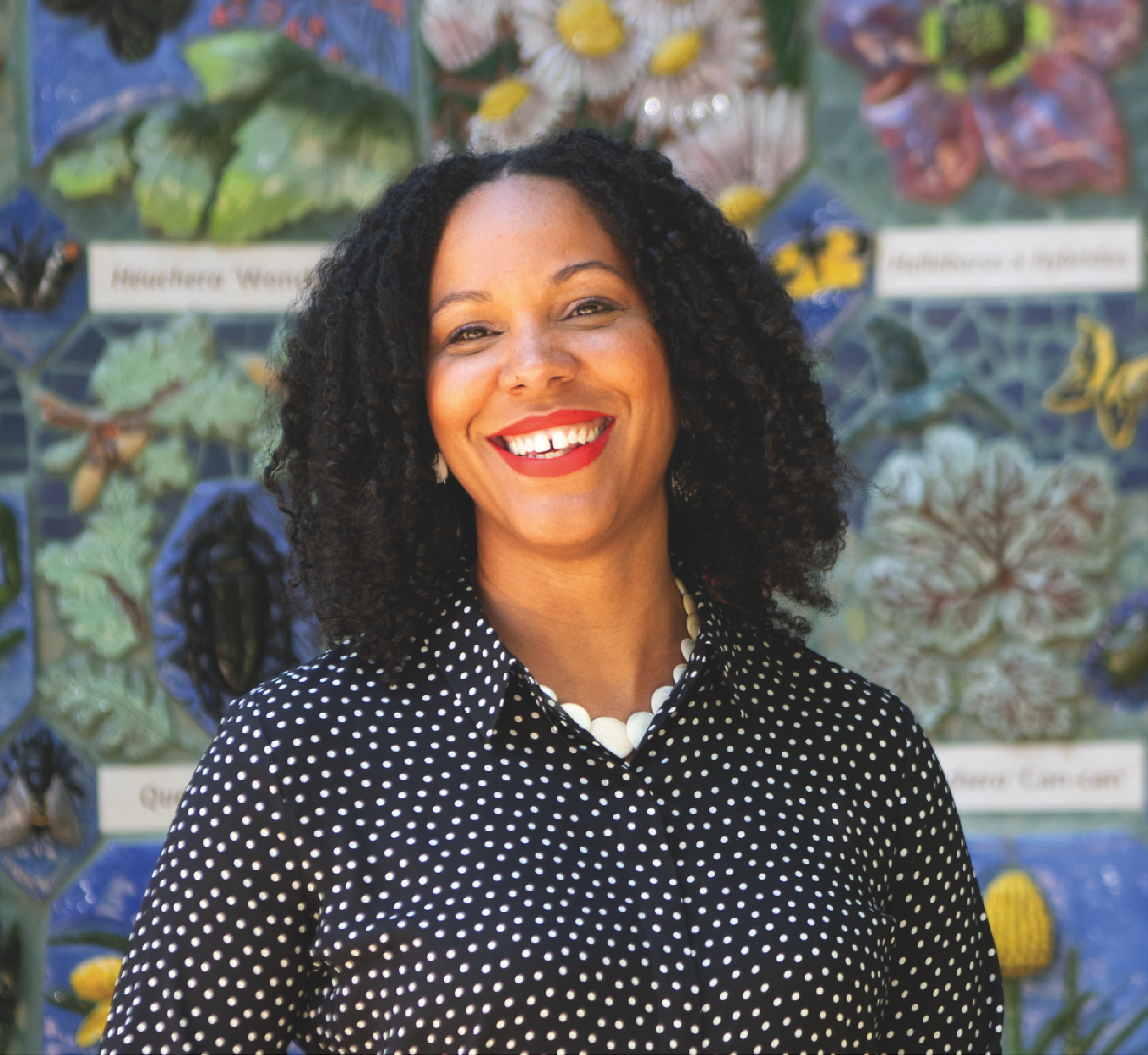
Assistant Professor, University of California, Davis
Postdoctoral Fellow, Columbia University
PhD, Northwestern University
Some neuroscientists are drawn to the field by alluring, big-picture phenomena such as memories or perceptual illusions before zooming in on the molecular components that make those things possible. For Theanne, it was one of the most fundamental molecular components of the nervous system – the sodium-potassium pump – that first captured her fascination. Though science-inclined from a young age, Theanne wasn’t formally introduced to neuroscience (and the pump) until her high school biology class. She was struck by how this single protein regulates the precise balance of electrical and chemical forces to enable neuronal communication. This sparked her interest in a career in neuroscience and foreshadowed her initial specialization in biophysics and cellular physiology before zooming out from single molecules to whole organisms. Today, as an Assistant Professor at the University of California, Davis and an HHMI Freeman Hrabowski Scholar, Theanne studies the molecular, cellular, and circuit mechanisms of proprioception and its effects on sensorimotor function and behavior.
Having identified neuroscience as her calling, Theanne sought a college that offered it as a major—a rarity at the time. Her preference for a small, liberal arts school, similar to where her parents were professors, led her to Smith College, the historically women’s college in western Massachusetts. Through a brand new work-study program geared toward students historically underrepresented in the sciences, she was able to dive into neuroscience research in her very first year in the neuropharmacology lab of Dr. Adam Hall. Working her way up from basic lab maintenance tasks to conducting her own experiments, Theanne gained considerable expertise in electrophysiology while studying how specific classes of inhibitory neurotransmitter receptors are targeted by different anesthetics. She found that she loved research, especially the instant gratification of recording neurons’ electrical activity with electrophysiology, and this bolstered her already strong desire to pursue a PhD. Meanwhile, Theanne spent a semester abroad in Santiago, Chile to achieve her other goal of learning Spanish. Looking for an excuse to go back to Chile while gaining further research experience, Theanne went to work in an Alzheimer’s research lab at Pontifical Catholic University in Santiago, first for a summer internship and then again for two years as a full-time research technician after graduating. With considerable and international research experience, Theanne was accepted to and joined the Interdepartmental Neuroscience Graduate Program at Northwestern University in Chicago.
Inspired by the rave reviews of a fellow student, Theanne decided to rotate in, and ultimately joined, the lab of Dr. Geoff Swanson. For her dissertation in the Swanson lab, she sought to understand how the biophysical functions of kainate receptors, a specific type of glutamate receptor, are modulated by a class of small, ancillary proteins known as auxiliary subunits. She learned molecular biology techniques to complement her expertise in electrophysiology and identified specific compartments of these receptors that allow auxiliary subunits to bind and alter the receptors’ configuration, and thus, their function.
Upon completing her PhD, Theanne wanted to return to her early love of neurophysiology. When she attended a conference and heard a compelling lecture by Dr. Ellen Lumpkin on glutamatergic signaling in peripheral mechanosensation, she knew that that was what she wanted to do for her postdoc. She emailed Ellen, but to her dismay, received no response. But Theanne persisted and followed up with another email, and this time she received a reply within the hour; Ellen had simply missed the first note. Thus, Theanne moved to New Jersey to work in the Lumpkin lab at Columbia University in NYC. Here, her new research goal was to determine why cold-sensing neurons in the peripheral nervous system are so hyperexcitable, firing at extremely high rates with very little external input. Theanne found that NaV1.1 – a specific class of voltage-gated sodium channels previously thought to act primarily in the brain – was the key ingredient for these peripheral sensory neurons’ hyperexcitability. Leveraging the expertise developed during her PhD, she went the extra mile to also characterize the specific biophysical properties of the NaV1.1 channel that created this phenotype.
Behind the scenes of these exciting scientific discoveries, Theanne was experiencing dramatic changes in her life. Less than a year and a half into her new position, Theanne had her first daughter. Just a year and a half later, she had her second. And less than a year after that, Ellen announced that she would be moving her lab across the country to UC Berkeley. With her husband newly tenured at Rutgers University and two toddlers at home, moving with Ellen was not an option for Theanne, forcing a relatively early conclusion to her postdoc. While Theanne took up a temporary staff scientist position at Rutgers to figure out her next steps, some colleagues in biophysics and physiology from UC Davis encouraged her to apply to a job in their department. Theanne was skeptical; while she had been consistently productive and successful throughout her training, she lacked her own source of funding and a “big name” journal publication, which she feared she needed to be competitive for such a position. Nonetheless, with Ellen’s and her colleagues’ encouragement, she applied and advanced to the stage of interviewing in-person at Davis in March of 2020, just before the COVID19 pandemic gained full force and the world effectively shut down. After a few months of silence, Theanne reached out to the chair of the search committee to inquire. To her delight, she was notified that she was their top-choice candidate. By that fall, both she and her husband had secured faculty positions at Davis and moved their family to California.
In her own lab, Theanne continued to study how sensation is shaped by ion channel biophysics and physiology but moved away from temperature sensation to proprioception – the physical sense of one’s own body. NaV1.1 proved to be a convenient bridge between these research directions. Theanne’s new lab established that this same class of voltage-gated sodium channels was also important for the similarly hyperexcitable state of proprioceptive sensory neurons as of the cold-sensing neurons, with an additional contribution of NaV1.6 channels. To further understand their functional relevance, her lab developed mutant mice that lacked these sodium channels only in proprioceptive neurons. This work led to the exciting discovery that these sensory neurons seem to do more than just sense information from the external world; they may also be regulating other physiological processes such as muscle development, repair, and/or maintenance. This new direction has expanded the focus of the lab from investigating the role of ion channel biophysics in cellular neurophysiology/single neuron properties to how sensory neuron function impacts organismal physiology and behavior. For these exciting discoveries and promising new ventures, Theanne was recently named both a 2025 HHMI Freeman Hrabowski Scholar and a 2025 McKnight Fellow—two of the highest honors for an early-career scientist.
Theanne’s science is not her only highly successful professional endeavor. She is also a prolific children’s book author, having published 9 installments of her chapter book series, The Magnificent Makers, as well as co-writing companion books for the Netflix series Ada Twist, Scientist. Theanne’s venture into writing was inspired by her lifelong love of writing and storytelling, as well as science. She also wanted to portray Black and Brown kids having fun with science—visible representation that she wants for her kids and that she wishes she could have had more of herself. Feeling inspired after her first daughter was born, she began to attend writing conferences whenever she could and pitched story ideas over social media. She eventually caught the attention of an editor at Random House, and after some workshopping, The Magnificent Makers was born. Even though balancing her work as an author became increasingly challenging as she transitioned to the PI role, she continues to brainstorm new ideas for further installments, and maybe even a new series.
While Theanne's careers as scientist and writer have brought much tangible success, she does not get caught up in the awards and accolades. Theanne’s favorite quote from Olympic champion swimmer Katie Ledecky perfectly encapsulates her approach to her career: “Don’t fall in love with the podium more than you love the process.” Whether she is publishing scientific papers or popular children’s books, it is clear that genuine enjoyment and enthusiasm has and continues to guide everything that Theanne does.
Find out more about Theanne and her lab’s research here.
Listen to Megan’s full interview with Theanne on Oct. 7, 2025 below!