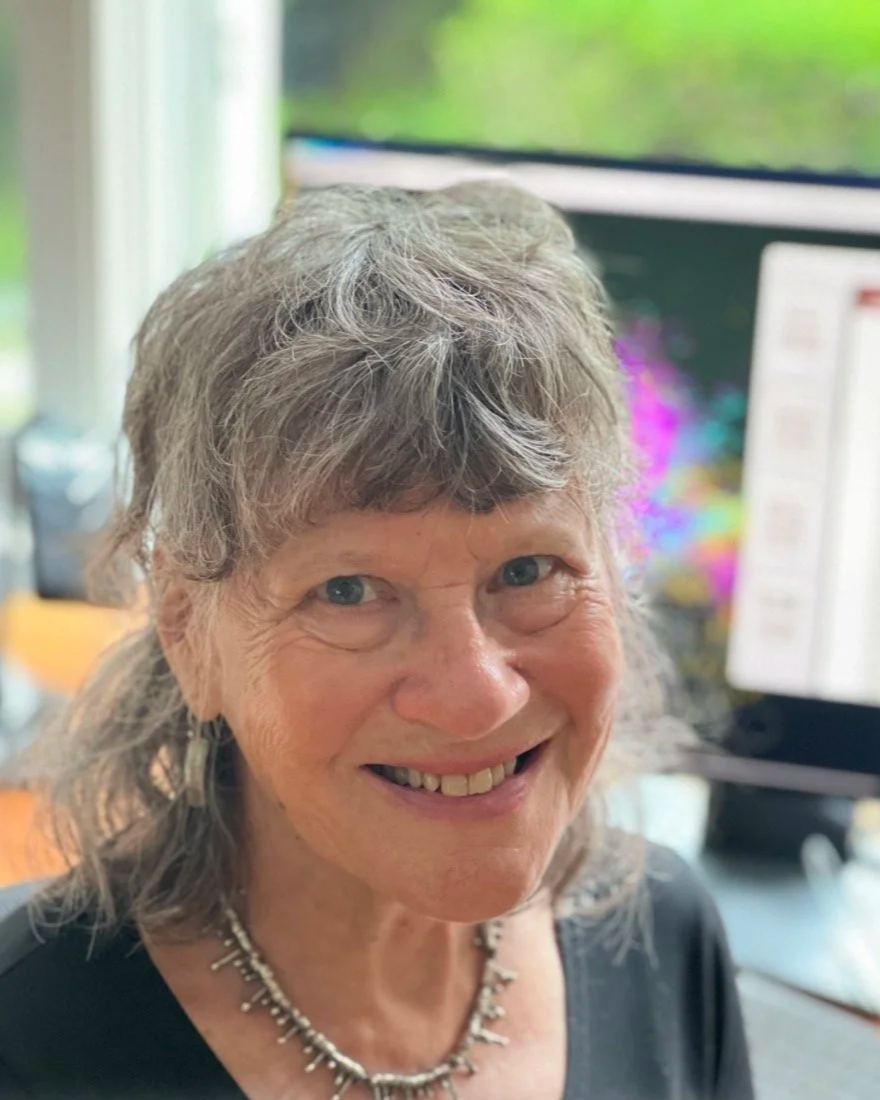
Dr. Suzanne Haber
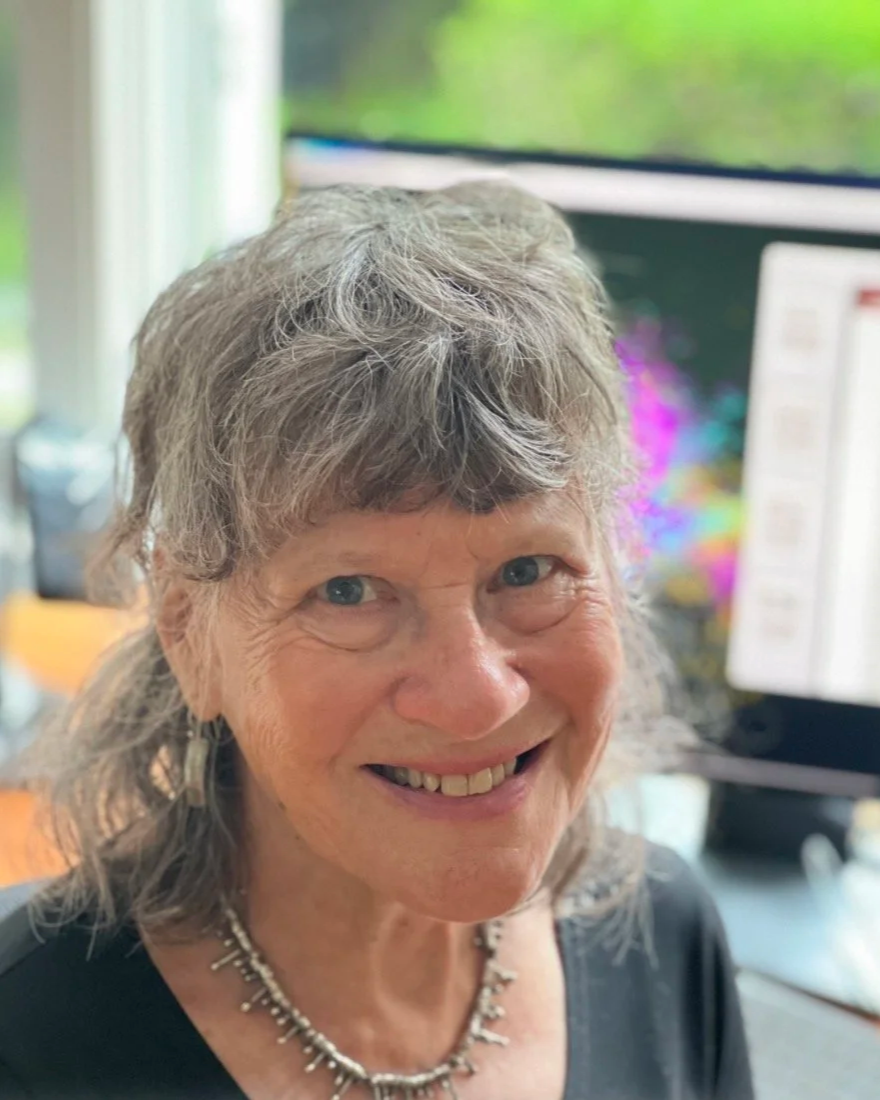
Professor, Harvard Medical School and the University of Rochester
Postdoctoral Fellow, MIT and the University of Minnesota
PhD, Stanford University
Since childhood, Dr. Suzanne Haber has been fascinated by human behavior. Why do people act the way they do, and why do people sometimes act in a way that does not quite make sense? While these questions have been a driving factor throughout her career, Suzanne did not originally gravitate towards neuroscience. After a circuitous route through psychology and anthropology, she ultimately became interested the brain and dedicated her career to defining its complex connections. Today, Suzanne is a professor at Harvard University and the University of Rochester. Her lab investigates the cortico-cortical and cortico-basal ganglia circuits underlying reward-based learning and decision making. Her focus is on how these circuits might be therapeutically targeted in individuals with a range of cognitive and motor disorders.
Suzanne’s early interest in human behavior led her to choose a psychology major as an undergraduate at Kent State University. After earning her bachelor’s degree, she spent a while hitchhiking around Europe. Her travels piqued an interest in human culture, and after returning stateside, Suzanne started a master’s program in anthropology at Northeastern University. For her thesis work, she studied chimpanzee behavior, although her research was limited to reading books and articles. As she read, Suzanne became especially intrigued that, despite their incredibly human-like behavior, chimps had not evolved language. This made her wonder about how their brains differ from those of humans.
Suzanne’s first foray into studying the brain came somewhat serendipitously. She met scientists at Massachusetts General Hospital (MGH) engaged in research involving dopamine and its effects on behavior. They encouraged her to apply for a job in a lab that focused on the role of dopamine in mental health disorders. Feeling underqualified, she was shocked when she landed the position. She enjoyed working in the lab, however, the event that really launched her career came not from her research experience at MGH but from a vacation. Not long after joining the MGH lab, Suzanne was planning a vacation to Israel when she had the idea to merge the trip with travel to Africa—somewhere she had always wanted to go. Initially, her PI was less than thrilled when she asked to take a month off from lab. Ultimately, though, he connected her with a group at Stanford that was setting up a ‘sister’ facility linked to the Gombe Reserve in Tanzania, the site where Jane Goodall was studying chimp behavior. Suzanne was very excited at the opportunity to travel to Tanzania and spend time with the primates she had read so much about during her master’s work, and the trip ultimately became a turning point in her career. The chimps’ human-like behavior hammered home how deeply behavior is embedded throughout evolution.
She applied to and was accepted into Stanford’s Neuroscience graduate program, where, working with Dr. David Hamburg, Suzanne set up a free range (large enclosure) rhesus monkey colony. Inspired by her work at MGH, she gave low doses of amphetamine to one monkey at a time. She then observed the monkeys in order to identify any changes in the treated individual’s behavior, including social interactions, as well as the group dynamics. As expected, she found that amphetamine made the monkeys hypervigilant. Interestingly, their personal space—the perimeter that another animal could enter before the subject either turned around or moved away—expanded, particularly from behind. Other changes included increased grooming with a selected ‘friend’ but decreased grooming with all other animals in the group. While writing up her thesis, she did a small project with Dr. Stanley Watson, a postdoc in the Dr. Barchas lab, on the visualization of dopaminergic neurons using a new fluorescent marker. Seeing the neurons opened up the beautiful world of microscopy. Suzanne was hooked.
After finishing her thesis and before deciding on a postdoc, Suzanne attended a summer course at Cold Spring Harbor Laboratory, where she learned how to do electrophysiological recordings. Although she was mesmerized by the experience of hearing neurons firing in real time, Suzanne came to an important realization: when considering your research direction, it is important to consider whether the methodology fits your personality. While Suzanne loved listening to neurons, she knew that she did not have the temperament for the finicky nature of getting a good electrophysiological recording. She enjoyed observation, without interference or manipulation. The choice for a postdoc was clear: either animal behavior (ethology) or anatomy, a life studying neurons and their connections under a microscope. She chose anatomy.
In her first postdoc with Dr. Bob Elde at the University of Minnesota, Suzanne worked with rodent brain tissue, using immunohistochemistry to identify where neurotransmitters (dopamine, enkephalin, substance P, and dynorphin) were located, with a focus on basal ganglia structures. Realizing that much of this work had never been translated to primates, she convinced Bob to let her obtain brain tissue from monkeys so that she could repeat some of the same histological techniques in the monkey brain. Her cumulative work from her first postdoc includes some of the very first papers describing the anatomy of these neurotransmitter systems in primates. Seeking to diversify her toolbox for probing circuit anatomy, Suzanne then did a second postdoc at MIT in Dr. Walle Nauta’s lab, where she learned neuroanatomical tracing techniques for visualizing circuits that her lab still uses today.
After her second postdoc, Suzanne was promoted to lecturer and then assistant professor at Harvard University. Soon after that, her husband received a job offer from the University of Rochester. Today’s practice of offering a tenure track position to the spouse of a recruit was extremely uncommon in the early 80s. At that time, if an offer was made to the woman, it was typically a research position, not a tenure track position. However, the department chair at University of Rochester was forward-thinking, and Suzanne received a full-package offer as a tenure track assistant professor. They moved to Rochester in 1983, where her lab continued to focus on investigating circuit anatomy in primate tissue. During this time, Suzanne made several important anatomical discoveries. For example, she detailed the basal ganglia connections in non-human primates, showing anatomic integration between functional cortico-basal ganglia loops. The dominating theory at the time was that the cortico-basal ganglia system consisted of a series of parallel and segregated cortico-basal ganglia loops: motor, cognitive, and limbic. The idea of integrating across them made more sense with respect to the development of action plans that are based on a combination of motivation, cognitive control, and the execution of the behavior.
More recently, Suzanne’s work has expanded into the clinical arena. Several years after she moved to Rochester, she was contacted by Dr. Steve Rasmussen, well known for his work on obsessive compulsive disorder (OCD). Steve was involved in developing a new therapeutic approach to OCD using deep brain stimulation (DBS). DBS a therapy in which electrodes are surgically implanted to stimulate specific connections (or white matter) via electrical impulses generated by a neurostimulator—akin to a pacemaker for the heart. Proper placement of the brain electrodes requires a deep knowledge of the wiring of the brain’s connections, and Steve was looking for a collaborator who possessed this expertise. Specifically, he wanted to understand what circuits should be targeted and the location of those connections. Suzanne’s lab was the perfect fit. After receiving a successful multi-institutional R01 grant to explore this option, they applied for a NIMH multi-institutional Conte Center, focusing on neuromodulation in OCD. Part of the focus of this grant was to use anatomic priors from monkey tracing experiments to better understand connectivity in the human brain. Suzanne developed a collaboration with Dr. Anastasia Yendiki at the MGH Martinos Imaging Center to use the anatomy to improve diffusion MRI (dMRI) methodology. This unique collaboration, combining the ‘ground truth’ of anatomic primate data with state-of-the art imaging systems, has demonstrated for the first time the accuracy and identification of key cortical and subcortical connections in the human brain. NIMH has funded their program continually for over twenty years.
Recently, Suzanne became affiliated with Harvard Medical School and MGH with the goal of bringing her anatomy work into a more patient-focused space in psychiatry, expanding beyond the scope of the Conte Center. While the University of Rochester has been an incredibly supportive environment, they do not possess the psychiatry infrastructure needed for this translational work. She was recently appointed as Professor at Harvard Medical School. Suzanne’s ultimate goal is to help develop personalized approaches for treating a range of different disorders, including but not limited to OCD, depression, and Parkinson’s disease. The goal is to use her anatomical research to inform the “sweet spots” for better invasive and non-invasive neuromodulation that can be personalized based on individual variation and the target location. Suzanne acknowledges that it is sometimes an uphill battle to convince others that brain anatomy is still crucial knowledge and that there is much more to discover. But the growing interest in precision treatments, coupled with new imaging technologies, have shined the spotlight back to basic anatomy. A look at Suzanne’s illustrious career confirms that, indeed, brain circuits and their intricate anatomy are back in fashion.
Find out more about Suzanne and her lab’s research here.
Listen to Nancy’s full interview with Suzanne on January 27, 2026 below!