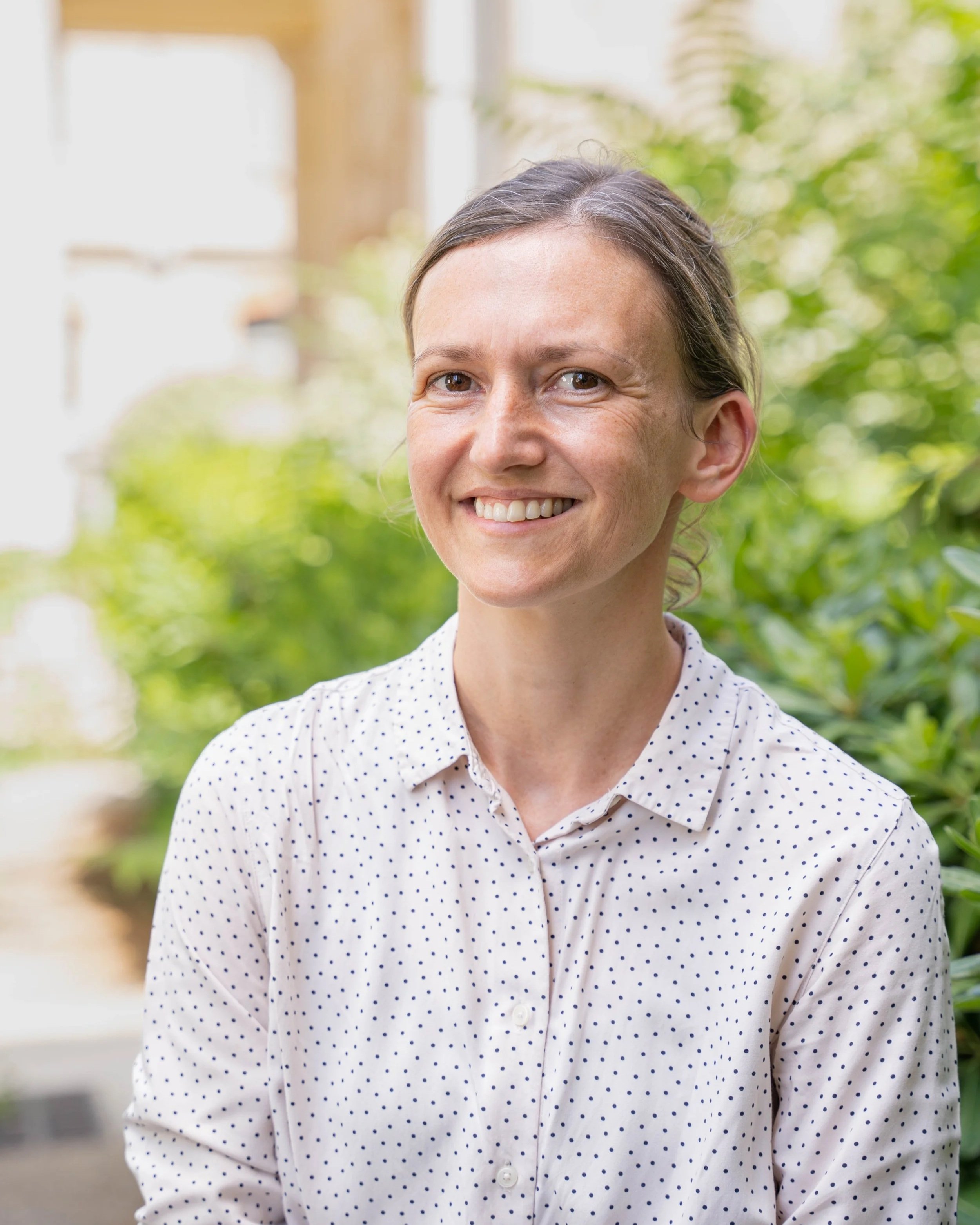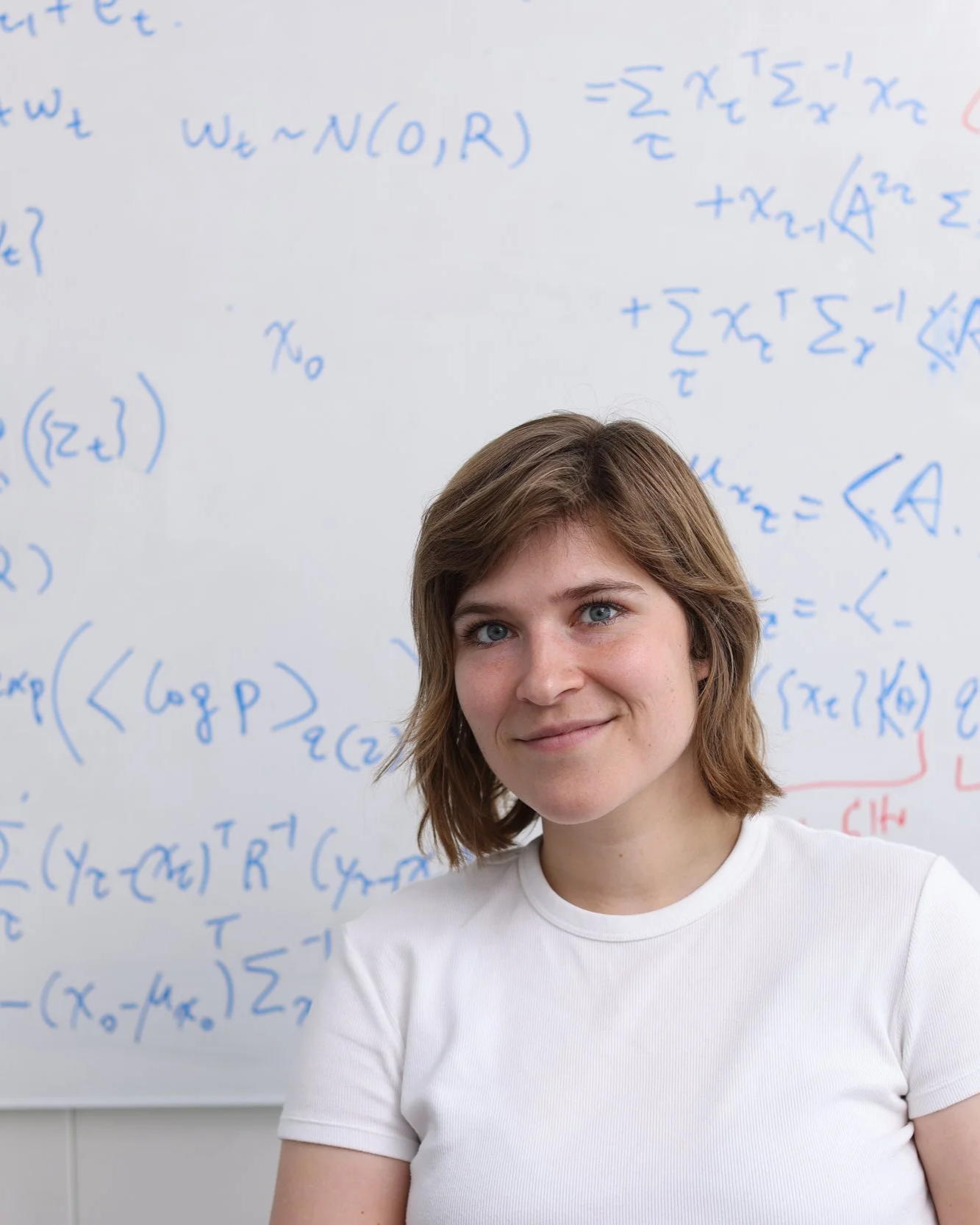
Dr. Pegah Kassraian
Assistant Professor, University of Bern
Postdoctoral fellow, Columbia University
PhD, ETH Zurich
Dr. Pegah Kassraian studies the hippocampus, a brain region that helps us remember events, people, and how to get home. Pegah has found her way back to her home country of Switzerland, to study the very part of the brain that made that journey possible. As a new Assistant Professor in the Institute of Experimental Neurology (ZEN) at the University of Bern, Pegah's lab will study the hippocampal basis of social behavior.
Growing up, Pegah's family emphasized education, the pursuit of knowledge, and the importance of understanding the world around her. While this sounds like the perfect setup for a career in academia, she has always taken her career one step at a time. Pegah's first step in her career was her undergraduate degree in math and physics. At the same time, she studied the philosophy of science, which drove her "to question even the most universal-seeming concepts." She believes this dual approach fundamentally shaped how she thinks about science.
After finishing her undergraduate degree, Pegah wanted to work in a field where she could use the quantitative methods she had studied to address questions about what makes us human and how the environment shapes us and our behavior. She found that mix in a Master's program in Neural Systems and Computation at ETH Zurich, where she was supervised by Kevan Martin and Rodney Douglas. The program was her first major introduction to neuroscience and experimental science. Her undergraduate education had been largely theoretical: math and physics provided problems with known rules and solutions. During her Master’s, neuroscience was presented in a completely different way. It was filled with open questions and the challenge of figuring out how to answer them. Although Pegah primarily focused on computational work, she quickly learned that understanding the data required understanding where it came from. Working closely with experimental scientists taught her how data are collected and what limitations are built into those measurements. This experience also taught her the international nature of science. Pegah grew up in small Swiss towns and this program was highly international with students coming from all over the world.
Following her Master's, Pegah stayed at ETH Zurich to complete her PhD and began moving towards experimental work herself. During her PhD, she became interested in how expectations about the environment shape our perception of it. Using functional magnetic resonance imaging (fMRI) in humans, she tested how prior information about sensory input altered neural representations of that sensory input in early sensory cortex. Her findings showed that what we expect to perceive can shape the way sensory information is represented in the brain. In primary somatosensory cortex, for example, sensory stimuli that matched a participant's expectations could be decoded more accurately in the neural activity, suggesting that even very early sensory regions are influenced by prior knowledge.
For Pegah, computational analysis and observation-based experiments were not enough. She wanted to understand how specific cells and circuits influence behavior. To do this, Pegah decided to work in mice during her postdoc, so she could utilize the cellular- and circuit-dissection tools available in that system. This decision brought her to Columbia University and the lab of Dr. Steven Siegelbaum, where she took one of the biggest leaps of her scientific career. She had never conducted mouse experiments before, and Steve recognized that taking on someone without that experience was a risk—but agreed to take that risk with her. The transition was challenging, but it was exactly what Pegah had been looking for.
It was also in the Siegelbaum lab that Pegah found the scientific question that would shape the next stage of her career. She became interested in social behavior because, from her perspective, social interactions push the boundaries of the brain's basic computational principles. Social interactions vary between individuals and across contexts, and rarely have a single optimal response. Studying them could reveal how flexible brain circuits truly are. Pegah wanted to understand how the brain remembers other individuals, and how it remembers whether those individuals are safe or threatening.
At the center of her work was the hippocampal subregion CA2. Previous work from the Siegelbaum lab and others had shown that CA2 is critical for social memory: when CA2 activity is silenced, mice can no longer distinguish a familiar individual from a new one. Yet their spatial and contextual memories remain intact. Pegah wondered whether CA2 might do more than simply encode who another animal was. Using behavioral experiments, targeted manipulations of neural activity, and calcium imaging, Pegah found that CA2 is important for linking social identity with emotional significance. During a behavioral task, mice interacted with two spatially separated individuals. One individual was then paired with a mild electrical shock, while the other was not. When CA2 was silenced, mice could still experience fear and respond fearfully to social contexts. What changed was their ability to associate that fear with one particular individual. Rather than avoiding one threatening mouse while approaching a safe one, the animals began avoiding both. Using neural decoders, Pegah found that social valence became incorporated into CA2's neural representation of social identity. Together, these findings suggest that CA2 can link the identity of another individual with the emotional significance of an interaction, helping an animal distinguish between someone who is safe and someone who poses a threat.
As she embarks on a new phase of her career and starts her own lab at the University of Bern, Pegah wants to continue pushing social neuroscience forward. She wants to study social behavior in more naturalistic settings, closer to how animals actually live. She hopes this will help her better understand how the physical and social environments interact to shape the brain and behavior. She also believes naturalistic behavior can help researchers ask questions that better reflect the flexibility and diversity of real social interactions. In Switzerland, she's building a lab that brings together the questions that have shaped her scientific journey. And, in more ways than one, she's found her way home.
Find out more about Pegah and her lab’s research here.
Listen to Meenakshi’s full interview with Pegah on May 5, 2026 below!