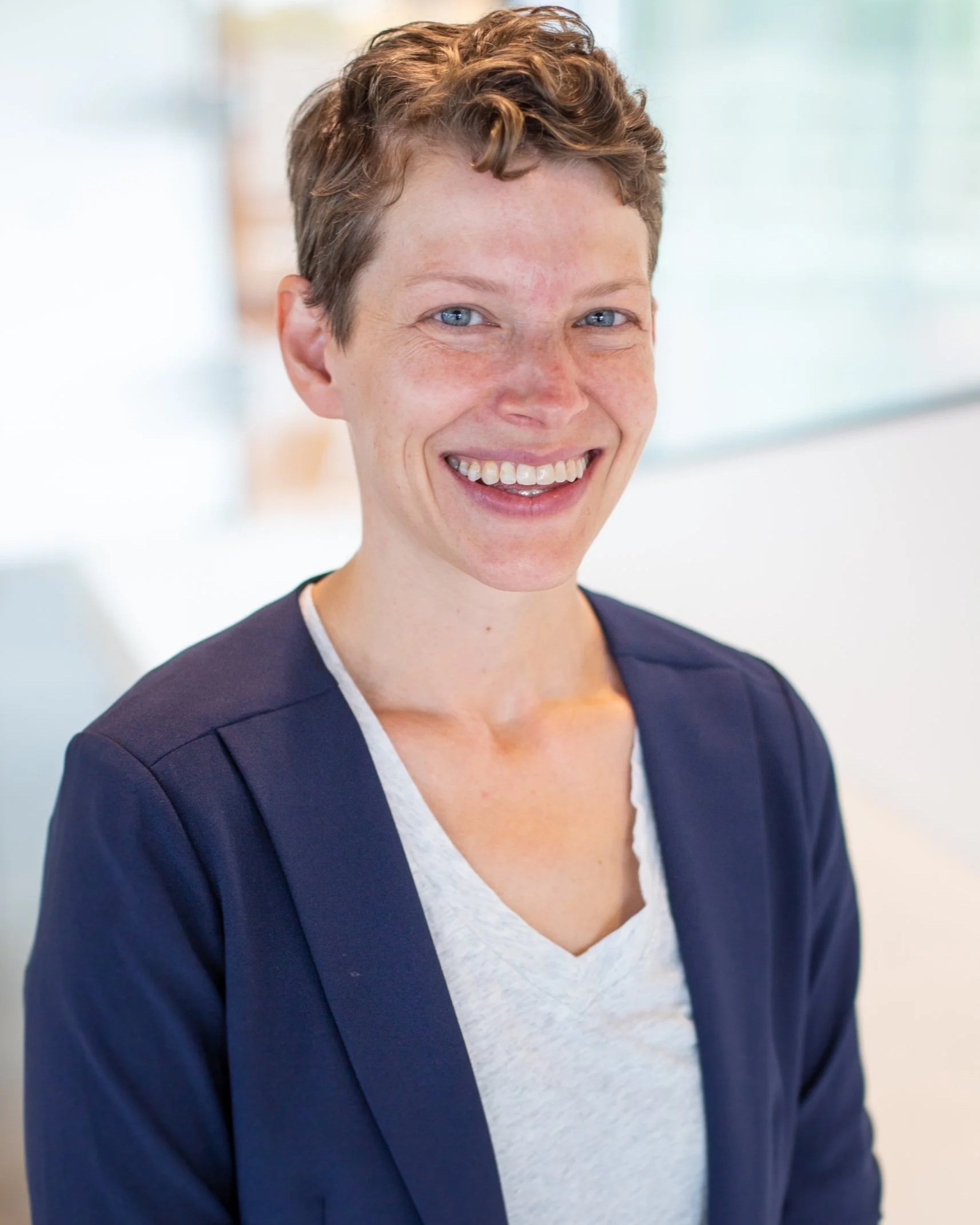
Dr. Katherine Tschida
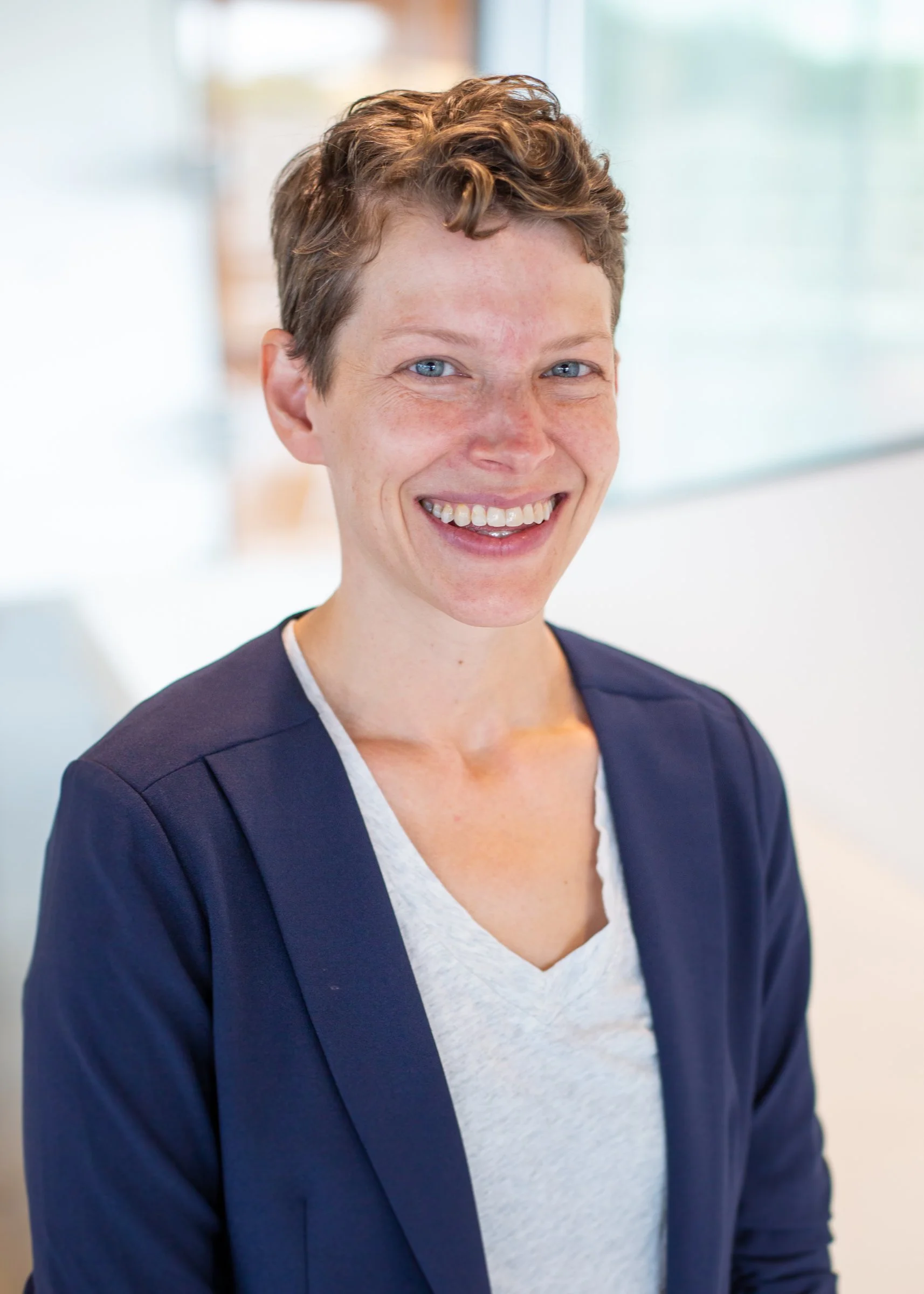
Assistant Professor of Psychology, Cornell University
Postdoctoral fellow, Duke University
PhD, Duke University
From her first exposure to neuroscience, to the first paper she read on songbirds, when something piques Dr. Katie Tschida’s interest she pursues it with perseverance and curiosity. This instinct has served her well; Katie is now an Assistant Professor of Psychology at Cornell University, where her lab studies the neural circuitry underlying social behaviors, with an emphasis on vocalizations.
Based on the career trajectories of those around her, Katie always thought she would work in medicine or engineering. During high school, however, Katie stumbled upon a brochure for a residential summer course at a small college in Virginia, which was offering a course on human neuroscience. She spent the summer at this course and was quickly all in on becoming a neuroscientist.
She enrolled at Grinnell College in Iowa for her undergraduate degree, where she majored in biology and found a research position in the lab of Dr. Clark Lindgren, where she studied the neuromuscular junction of lizards. During her coursework at Grinnell, Katie read a paper on the neuroscience underlying songbird vocalizations. Fascinated by the remarkable specialization of the songbird brain and the association of these vocalizations with social behavior, Katie decided that she would apply to PhD programs in neuroscience and try to find a lab that studied songbirds.
Katie found the perfect fit for her PhD at Duke University in the lab of Dr. Rich Mooney. Katie, along with Dr. Todd Roberts, a postdoc in the lab, wanted to investigate neural circuitry changes in two specific birdsong-related contexts. First, they were interested in how juveniles learn their parents’ songs, and how the dendritic spines on neurons important for singing and song learning changed during this process. They also wanted to study what happens when adult birds lose their hearing and, subsequently, are unable to sing as well. In both of these cases, they saw dramatic changes in dendritic spines. For example, when the birds lost auditory feedback (due to hearing loss) they saw weakening of the inputs to neurons in singing-related brain areas, and this loss of input was correlated with changes in singing behavior.
For these experiments, Katie remembers that she and Todd got the two-photon microscope to work relatively quickly for a single round of imaging but following the same dendritic spines and neurons over successive imaging days proved much more challenging. This was an incredibly difficult task; they had to anesthetize the birds each day and image the same region of the brain to study how these spines changed over time. However, Katie remembers how excited she was when she was able to image the changes in neuronal morphology of her first bird over several weeks, and to this day remembers its moniker: Black 751.
After finishing her PhD, Katie initially began a postdoc to study motor control in fruit flies (still at Duke), but when she found that she missed studying social behaviors and vocalizations, she decided to pursue studying rodents (and their vocalizations) instead. Katie then began a collaborative postdoc with her PhD PI (Rich) and a PI down the hall studying orofacial behaviors (Dr. Fan Wang) at Duke, and she began studying the motor control of vocalizations. Specifically, she was interested in identifying the population of neurons necessary for the production of social vocalizations in mice. A postdoc in Fan’s lab had developed an activity-dependent labeling strategy they could use in their mice, so Katie was able to use this technique to label the neurons that were active when a male mouse vocalized to a female mouse during courtship. This technique uses the transient expression of the immediate-early gene Fos as a way to permanently "capture" the neurons that are strongly activated during a defined behavioral episode, so the same cells can later be visualized, manipulated, or circuit-mapped. Then they used optogenetic stimulation to reactivate those labeled neurons when the mouse was not vocalizing, and this was sufficient to induce the same courtship vocalizations even when the mouse was in isolation. The discovery of these specific neurons that induced vocalization opened up a number of new questions that Katie was excited to follow up on in her own lab.
Katie was thrilled to join Cornell as an assistant professor, where she opened her lab in 2020. During her first weeks in the lab, she was struck by how different it is to be your own boss. The flexibility granted by the PI position allowed her to balance having three young children with her scientific career. For example, being her own boss meant not having to worry about booking rig time and other scheduling challenges.
Now, Katie’s lab is branching off into three main directions, in part based on the discovery she made in her postdoctoral work. Her lab is interested in understanding what inputs from the forebrain are important for promoting social vocalization in mice, and understanding how these vary based on sex. Male mice vocalize primarily during courtship, while female mice vocalize during same-sex social interactions. Katie’s lab is also interested in identifying the populations of neurons that regulate the motor production of social vocalizations as compared to broadband vocalizations (or squeaks). Finally, her lab is interested in understanding how vocal communication brain circuits change across development. When mice are young, they make infant vocalizations when they are cold or separated from caregivers. However, when they are older, they make adult vocalizations primarily during social interactions. Katie’s lab hypothesizes that the inputs to the brainstem circuit that controls vocalization drive these changes across development.
Katie describes her mentoring philosophy as trying to let her trainees have the freedom to make mistakes and learn to troubleshoot so that they can trust their ideas; but of course, she is always there to help when needed. This mentoring philosophy is shaped by her own experiences. Katie fondly remembers trying her postdoc experiment of stimulating neurons in the mouse brain to induce vocalization forty times before finally getting it to work, and the immense joy and pride she felt when it finally did. Katie has never been afraid to follow her curiosity, and now she is helping the next generation of scientists find the confidence to follow their instincts and to recognize that sometimes the most rewarding scientific discoveries come after forty attempts, not the first one.
Find out more about Katie and her lab’s research here.
Listen to Meenakshi’s full interview with Katie on April 24, 2026 below!