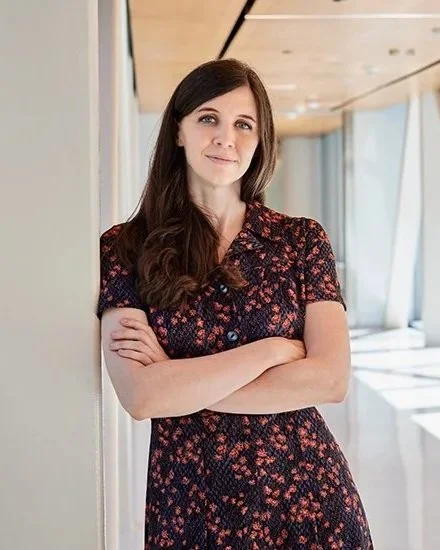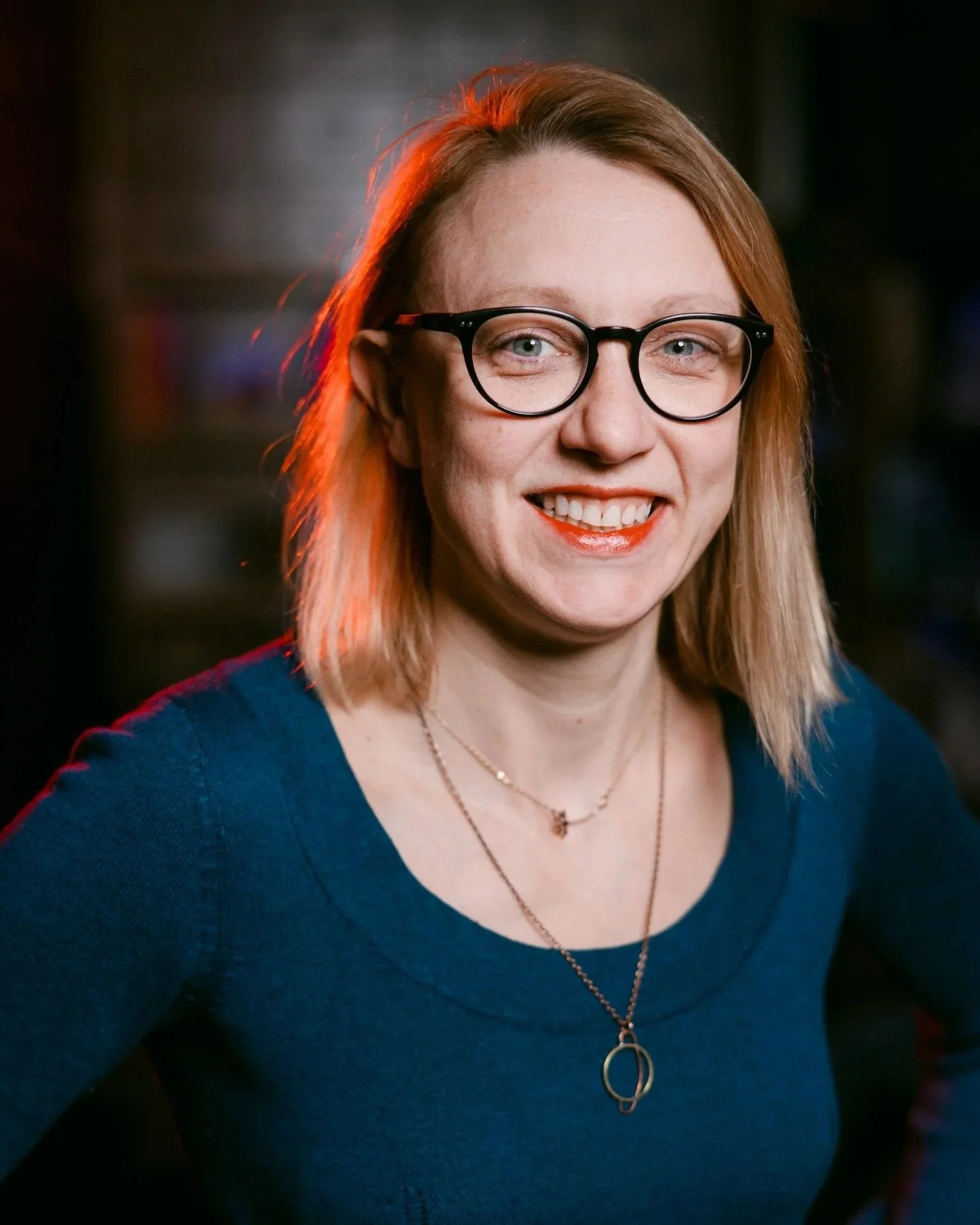
Dr. Paula Croxson
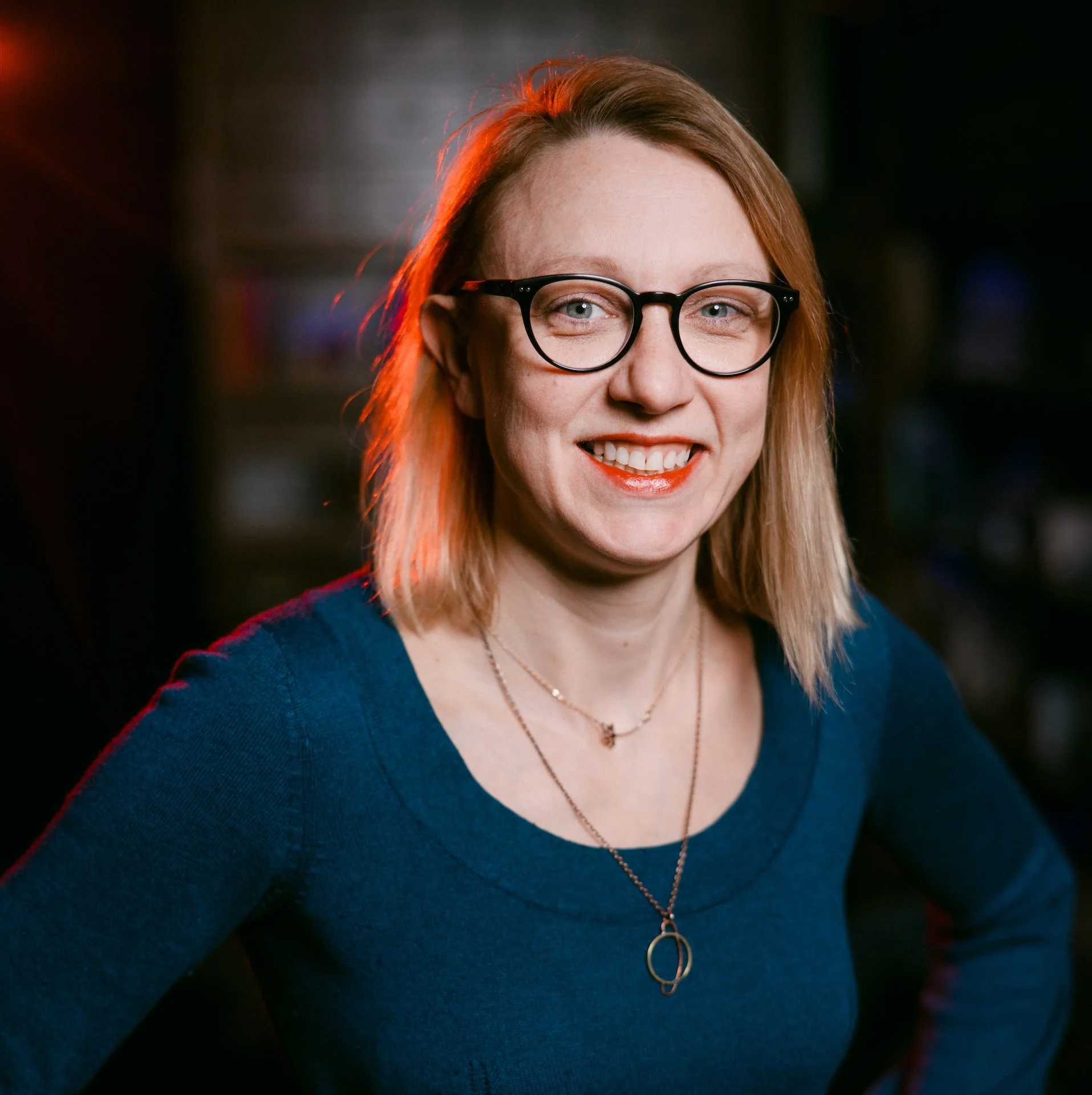
President, Stellate Communications
Assistant Professor, Icahn School of Medicine at Mount Sinai
Postdoctoral Fellow, Icahn School of Medicine at Mount Sinai
PhD, Oxford University
Photo Credit: Arin Sang-urai
When Dr. Paula Croxson tells the story of her journey in neuroscience, her narrative twists through forests of tantalizing hypotheses, crosses continents in pursuit of scientific adventure, and embarks boldly into the unknown. To Paula, storytelling is more than sharing her own experience, it’s a powerful tool any scientist can use to communicate. Beginning with an academic career studying the neural basis of memory at Oxford University and the Icahn School of Medicine at Mount Sinai, Paula is now a professional science communicator at Stellate Communications in New York.
When Paula was in high school in the UK, she loved science, and she was encouraged to apply to Cambridge University by a supportive teacher. Even though her grades weren’t up to their standards, her teacher called the admissions board, advocating for her potential. His support showed her the power of speaking up and taught her that you don’t have to take the first “no” for an answer. As a Natural Sciences major at Cambridge, she had her first undergraduate research experience studying cocaine addiction in rats in a behavioral neuroscience lab. When she graduated, she accepted a yearlong biochemistry internship at Merck, a multinational pharmaceutical company. When Paula realized that "the people who got to make the decisions in industry had PhDs,” she decided to apply to PhD programs herself.
Paula wasn’t certain what she wanted to study, so she looked for PhD programs that offered coursework and rotations before having to select a thesis lab. In the UK, only Oxford University and University College London fit the bill, and she found the perfect fit at Oxford. Paula was co-mentored by Drs. Matthew Rushworth and David Bannerman, studying decision-making in humans, rats and rhesus macaque monkeys. Paula’s PhD thesis work began with an investigation into the neural basis of effortful decision-making. People decide to invest effort in exchange rewarding outcomes constantly, like taking on a challenging project for a promotion at work or styling your hair for a night out with friends. Neuroscientists are motivated to understand how these decisions work in the brain because disorders like depression and anxiety can disrupt them. At the time, research in rats had shown that brain areas including the anterior cingulate cortex and striatum interface with the brain’s dopamine system to guide decisions. However, less was known about effortful decision-making in the human brain. To tackle this challenge, Paula designed a task that human participants could perform during a brain scan: many clicks of a computer mouse in exchange for varyingly small offers of money. Using functional MRI, she found that blood oxygenation levels (a proxy for brain activity) in the anterior cingulate and ventral striatum were related to the effort-to-reward ratio. Her finding was one of the first to link the neural basis of decision-making in humans to previous findings from animal models. Her second PhD project also bridged the gap between humans and animal models. Using diffusion-weighted imaging (DWI), she found striking similarities in anatomical connectivity between humans and rhesus macaque monkeys. Her DWI work provided one of the first quantitative anatomical comparisons between monkeys and humans.
For her postdoc, Paula stayed at Oxford and continued to work with monkeys, joining Mark Baxter’s lab studying memory. The process of learning and memory involves many brain regions—like the neocortex and hippocampus—and neurotransmitter systems—like acetylcholine, which is the target of most Alzheimer’s drugs. In diseases of memory like Alzheimer’s, multiple brain regions and systems can deteriorate at once, making it hard to identify their unique roles in memory. To investigate the interplay between cortical damage and acetylcholine, Paula trained monkeys to perform an object-in-place memory task. Monkeys were given the choice between two objects on a screen and had to learn which object was associated with a reward—a tasty banana pellet. They learned quickly due to the placement of the objects in a context, mirroring human episodic memory. Paula then selectively damaged the monkey’s memory circuits and their acetylcholine systems and tested them again. She found that the order of the damage mattered. Monkeys whose memory circuit was cut before their acetylcholine system was damaged were still able to learn the task quickly. But if the order of the two lesions was reversed, monkeys learned much more slowly. She concluded that acetylcholine is protective against the brain damage that causes memory loss, providing evidence for how acetylcholine drugs slow the progression of dementia
During her postdoc, Mark Baxter’s lab moved to the Icahn School of Medicine at Mount Sinai in New York City. When Paula re-located, she first got involved with the outreach community by volunteering with the city-wide Brain Awareness Week, a global outreach festival where neuroscientists and psychologists arrange interactive events for the public. However, Paula noticed that much of the programming was intended for children with little to offer adults. To make neuroscience fun for grownups, Paula joined forces with The Story Collider, a public storytelling nonprofit where scientists, doctors, and everyday people are encouraged to share personal stories about science. Working closely with one of their producers, Paula helped organize a brain story event; she even told her own story about how her grandmother’s Alzheimer’s diagnosis planted the seed of her interest in memory and the brain. The public response to her story was transformative for Paula—audience members personally thanked her for her candor, confessed similar experiences, and revealed that her story gave them a deeper connection to science. “It broke me in the best possible way and I’ve never related to science the same way again.” From then on, Paula poured every spare moment of free time she had into science communication, from speaking events like Nerd Nite and Taste of Science to articles in Psychology Today. Scicomm began to transform the way Paula viewed her own science: each experiment now served a key role in a larger scientific story. Paula published her thoughts on the power (and necessity) of narrative in science writing in the 2021 Nature Human Behavior article “You have to read this,” in which she provides practical tips for how to boost the narrative power of even the most technical science writing.
Paula’s passion for science communication kept growing, and her commitments began to compete for time with her career, even after she accepted a faculty position as an assistant professor at Mount Sinai. When Story Collider offered her a part-time position as a senior producer, she accepted but received criticism from her colleagues, many of whom thought she was “wasting her time.” They couldn’t have been more wrong. Scicomm gave Paula a profound sense of purpose, and while she continued to run experiments, write grants and papers, and mentor students, the call of scicomm eventually became too loud to ignore. When a friend and admired colleague, Dr. Alice Cronin-Golumb, nominated her for the SfN Science Educator award—which she won—it gave Paula the validation she needed to make a change. After five years at Mount Sinai, she resigned from the position she had spent years working towards and pivoted her career into full-time science communication. Her transition wasn’t easy; “I was very afraid of walking away from everything I had built.” She started with incremental steps, accepting roles with close ties to academia at Columbia University’s Zuckerman Institute and the Dana Foundation. Since then, Paula has joined Stellate Communications as the company’s president, where she leads a team of communication experts, writers, and designers to support science visionaries in communicating their work for the good of the planet, human health, and society.
Storytelling is powerful. Paula’s story communicates complex ideas, humanizes science, and reveals the hidden curriculum that helped shape her career. Following in her footsteps can cultivate trust and human connection between scientists and the public, which is something we all need at this moment when the future of science is uncertain. If the name of our organization is any clue, we at Stories of WiN are advocates for scientific storytelling, and sharing Paula’s story is our honor and pleasure.
Find out more about Paula and her lab’s research here.
Listen to Melissa’s full interview with Paula on Sept. 18, 2025 below!