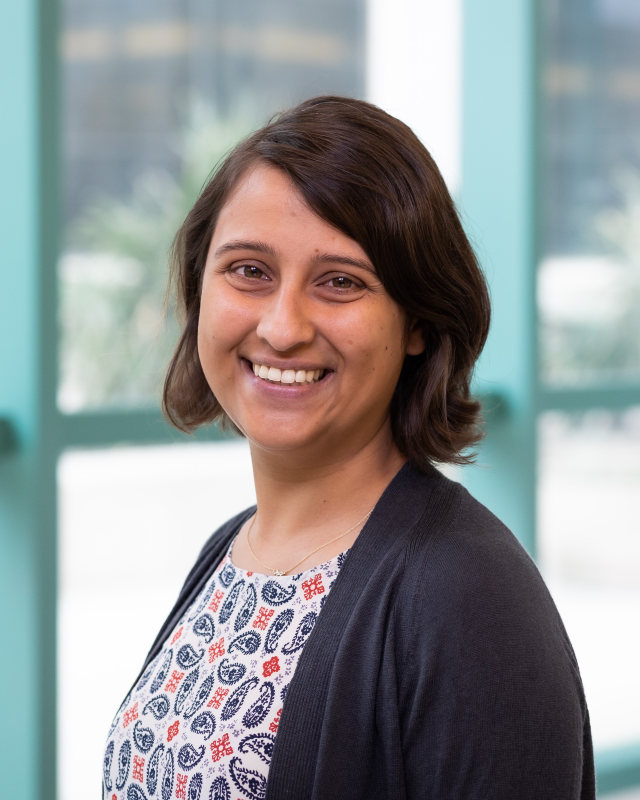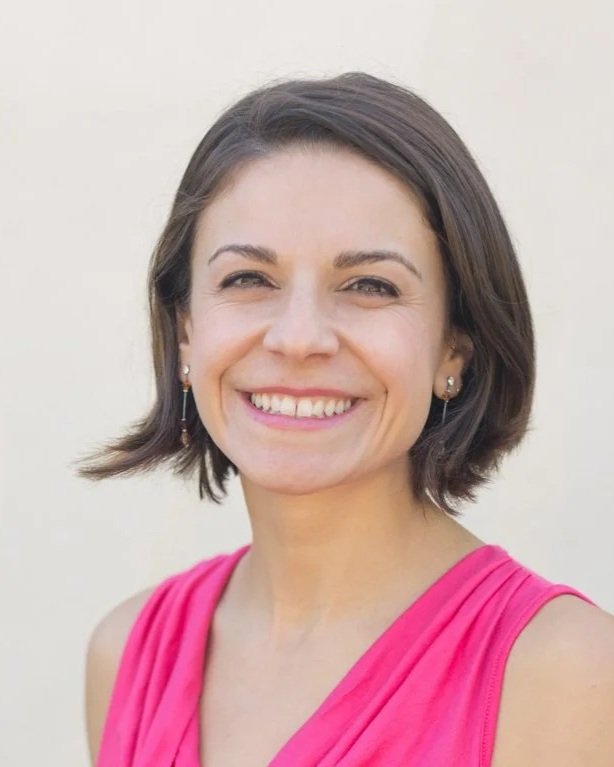
Dr. Laura DeNardo
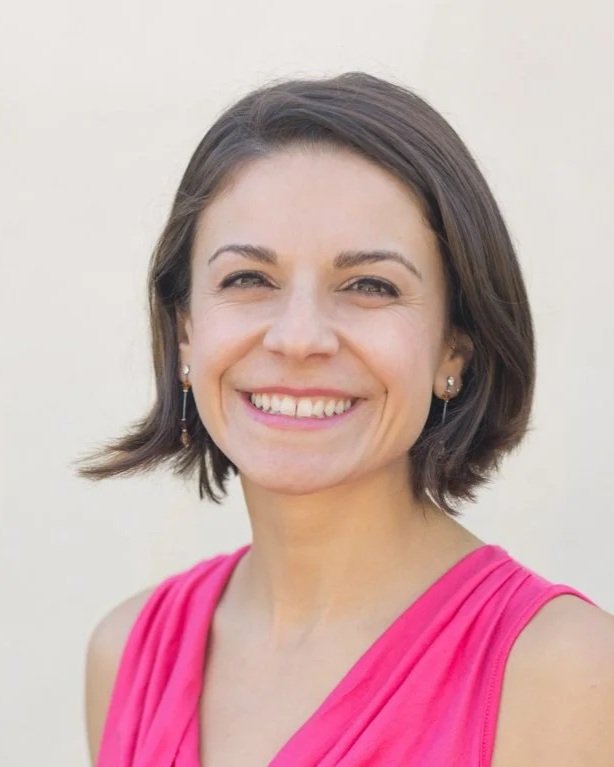
Assistant Professor, University of California Los Angeles
Postdoctoral Fellow, Stanford University
PhD, University of California San Diego
The first time Dr. Laura DeNardo looked at the medial prefrontal cortex of the brain through a microscope, she wasn't prepared for what she saw. Her anatomical tracing experiments revealed hundreds of fluorescently tagged cells projecting into this single region from all across the brain. That image has anchored Laura’s scientific life ever since. Now an Associate Professor in the Physiology Department at the UCLA David Geffen School of Medicine, Laura leads a lab devoted to understanding how the medial prefrontal cortex (mPFC) integrates this vast, clamoring chorus of information to guide behavior.
Laura came to neuroscience through a brain, mind, and behavior course at UC Berkeley, where she was pursuing a joint degree in Molecular and Cell Biology and Art Practice. After a brief experience working in a cognitive neuroscience lab, Laura learned the limitations of human research for gaining mechanistic insight into brain function. After taking a molecular and cellular neurobiology class with Dr. Richard Kramer, and eventually joining his lab, Laura learned how to study single ion channels in the retina, and how to design light-sensitive photochemical tools. It was Richard who first suggested she pursue a PhD, which hadn’t previously been on her radar. She has carried that moment with her as a PI, realizing that when you're teaching, you rarely know whose trajectory you are quietly shaping.
For her PhD, Laura joined the laboratory of Dr. Anirvan Ghosh at University of California San Diego, where she dove into a question at the heart of developmental neuroscience: how do synapses form? The Ghosh lab had narrowed their answer down to a family of proteins called leucine-rich repeat (LRR)-containing proteins. These proteins bind very specifically to their partner proteins on postsynaptic neurons. In this way, they act like molecular address labels that guide presynaptic inputs to physically distinct compartments along the postsynaptic cell. The hippocampus was an ideal region to study these proteins because its neural layers are spatially distinct, making the organization of inputs easy to observe. The protein that Laura focused on, NGL‑2, is found on the part of the dendrite closest to the postsynaptic neuron’s cell body. Using genetic tools to reduce NGL-2 levels in developing mice, Laura demonstrated through electrophysiology and confocal imaging of hippocampal dendrites that NGL-2 is needed to set up the right pattern of connections at specific synapses. This pattern allows cells to correctly integrate inputs from different brain regions, enabling neural circuits to function properly. Stepping back to appreciate the wide range of LRR-containing proteins that exist, Laura was amazed by how many knobs the brain has to control synaptic connectivity. By using these many modular molecular address labels, the brain can precisely wire itself together.
Toward the final stages of Laura’s PhD, her PI was recruited to lead a major pharmaceutical company in Switzerland. She found herself completing her paper largely independently, aside from exchanging faxed drafts across the world with Dr. Ghosh. This experience, though challenging, brought Laura some clarity. The independence she gained built her confidence and pushed her decisively toward a research career in academia.
Laura joined the laboratory of Dr. Liqun Luo at Stanford as a postdoctoral fellow, where she turned her attention from developmental synapse wiring to the resulting circuit-level function in the adult brain. The Luo lab was one of the pioneers of rabies tracing, a tool that uses a modified version of the rabies virus to map presynaptic inputs to specific brain regions. This virus travels in a retrograde direction, moving backwards across a single synapse from the postsynaptic to presynaptic neuron. By combining this tool with fluorescent dyes, the lab could map presynaptic inputs to their regions of interest. It was through this tool that Laura had her defining moment: seeing how the mPFC receives inputs from seemingly everywhere in the brain, and appears to be tasked with making sense of them all.
During her postdoc, Laura worked on developing TRAP2, a mouse line genetically modified to allow researchers to target neurons based on their activity. The system leverages the fact that for a brief time immediately after a neuron is active, a gene called Fos is expressed in the active cell. The TRAP2 mouse is designed to turn on or off genes of a researcher’s choosing during a defined window when Fos is expressed (i.e., when neurons are active). This makes it possible to equip these initially active cells with genetically encoded calcium indicators, opsins, or other tools to record from, manipulate, or monitor those same neurons weeks later. The tool has since been widely adopted across the field. Laura used TRAP2 mice to determine if neurons encoding a fear memory in the mPFC remain stable over time, or if different cells come to represent that memory. She discovered that new neurons were incorporated into the memory trace over weeks, while only a subset of the original population persisted. Using whole-brain tissue clearing and light sheet imaging, Laura found that the connectivity of these memory-encoding neurons shifted over the same period, from having stronger connections with the thalamus and striatum shortly after learning, to stronger connections with higher-order cortical areas later on. This pattern is consistent with the systems consolidation hypothesis, which posits that new memories are gradually redistributed into the cortex, and provides key insights into how the brain builds distributed networks that support long-term memory.
In January 2019, Laura opened her lab at University of California Los Angeles, where she explores the role of the mPFC in adaptive threat response—the brain's ability to integrate environmental cues with memories of past experiences to choose appropriate behavioral responses. She spent the first year of her professorship recruiting graduate students and postdocs, establishing behavioral paradigms, and setting up optogenetics and high-resolution video tracking. Despite this strong start, Laura suddenly faced a number of challenges in quick succession: her second child was born, the pandemic, and a graduate student strike erupted at UCLA. More recently, her NIH grants have been suspended due to forces that have nothing to do with the quality of her science. Through this all, Laura has held on to a resilient and grounded mindset. "There's nothing I did that caused this," she says. "I just need to keep the ship afloat." She stays informed, tries to buffer her trainees from the worst of the uncertainty, and keeps the science moving forward.
One exciting direction to emerge from the lab is a collaboration with her MD/PhD husband, Dr. Scott Wilke, whose lab acquired a miniaturized magnetic stimulation device capable of delivering transcranial magnetic stimulation (TMS) to mice. This approach is similar to human TMS, a non-invasive therapy now used to treat treatment-resistant depression, anxiety, OCD, and PTSD. Using this miniaturized tool in mice allows them to ask, with circuit-level resolution, how mPFC connectivity is altered by chronic stress (a core risk-factor for these neuropsychiatric disorders), and whether targeted stimulation can restore it. So far, the evidence points to a specific class of cortically-projecting cortical neurons, intratelencephalic cells, as being particularly receptive to this stimulation. Laura and Scott hope their labs together will uncover which synapses are lost under stress, which are regained with stimulation, and how local interneurons might be gating that plasticity.
To Laura, mentoring is just as important as the science itself. She has been nominated for multiple mentoring awards, and it is easy to understand why. Laura spends significant one-on-one time with each trainee, works to understand what drives them, and encourages people in the lab to look after each other. New graduate students are paired with senior lab members who could use an extra hand. This arrangement gets newer members onto papers early while giving more senior ones the support to finish. Through these efforts, the lab has woven its own culture of mutual mentorship, where Laura stands at the center as the mPFC of her lab: every signal gathered, every voice heard, and every path forward charted with certainty.
Find out more about Laura and her lab’s research here.
Listen to Melissa’s full interview with Laura on September 5, 2025 below!