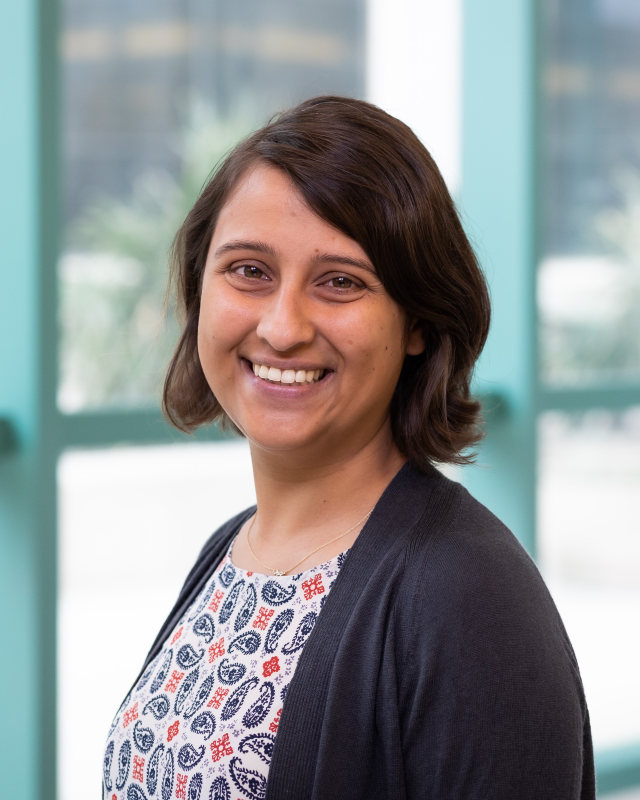
Dr. Anila D'Mello
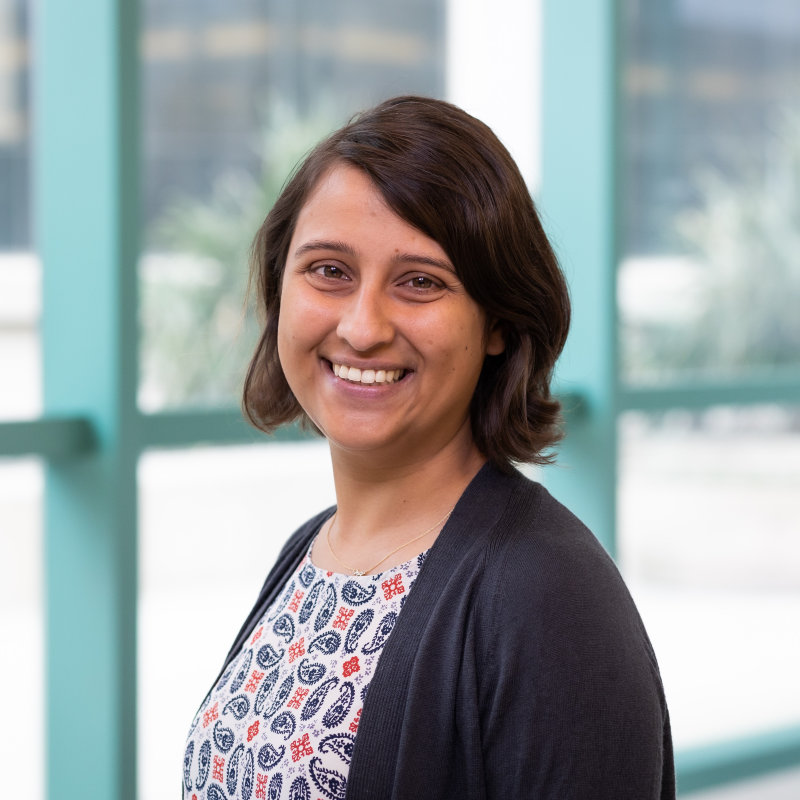
Assistant Professor, UT Southwestern and UT Dallas
Postdoctoral Fellow, Massachusetts Institute of Technology
PhD, American University
The daughter of a neurobiologist and a virologist, Dr. Anila D’Mello grew up immersed in science. She spent the summers of her youth refilling pipette tip boxes and interacting with graduate students in her father’s lab, and it was not rare for dinner table conversations to veer into molecular biology. These early life experiences made Anila resolute in her future aspirations: she did NOT want to be a scientist. She instead threw herself into humanities and politics: she joined the debate team and mock trial, and she canvassed door-to-door for local politicians. She planned to study government, become a lawyer, and work as a public defender. Ultimately, however, Anila could not fight the lure of the brain’s mysteries. Today she is an assistant professor and the Jon Heighten Scholar of Autism Research in the Department of Psychiatry and Peter O’Donnell Brain Institute at UT Southwestern, with a joint appointment in the Department of Psychology at UT Dallas. Her lab investigates language and cognition, and how the underlying brain circuits are altered in neurodevelopmental disorders.
Entering freshman year at Georgetown University in Washington, D.C., Anila was excited to pursue her dreams of becoming a public defender. Then, a fascinating introductory psychology class derailed those original plans, drawing Anila to the investigation of human thought and behavior: Why do people act the way they do? How do they learn language and to interact socially? It was not long before Anila changed her major to psychology. While the questions remained enticing, Anila began craving more mechanistic details, and she gravitated towards biology and neurobiology classes. She also got involved in research, joining Dr. Chandan Vaidya’s cognitive neuroscience lab, where she explored questions about ADHD and autism using a mix of behavioral and human neuroimaging techniques. This research experience solidified that she loved working with humans and the human mind—no pipette tips in sight! As she neared graduation, Anila knew that she wanted to continue doing science, but she did not yet necessarily envision a future as a PI. She applied to graduate school largely because more school felt like a familiar, comfortable option compared to applying for jobs. She applied broadly to cognitive science and clinical psychology programs, not realizing that the latter are particularly competitive and often require post-graduate work prior to admittance. Ultimately, Anila received one offer and entered the Behavior, Cognition, and Neuroscience graduate program at American University in D.C.
At American University, Anila joined the only lab at the university doing human neuroimaging, Dr. Catherine Stoodley’s lab. The Stoodley lab focused on the role of the cerebellum in human behavior and cognition. Historically, the cerebellum had been linked with motor function and balance rather than cognition, which meant that there was very little understanding about how the cerebellum impacts cognitive function and dysfunction. Inspired by her undergraduate research experience with autism, Anila set out to understand how the cerebellum might contribute to cognitive changes in people with autism. The cerebellum consists of an outer layer of neuronal cell bodies (the “gray matter”) and an inner core of myelinated axons (“white matter”). Anila found that, compared to typically developing children, children with autism exhibited reductions in gray matter in multiple cerebellar subregions. Further, she found that the degree of cerebellar gray matter reduction correlated with symptom severity in social interaction, communication, and repetitive behavior: those with more prominent reductions exhibited more severe symptoms. These findings highlight the functional impact of cerebellar structural differences in autism spectrum disorder.
The lessons that Anila took away from her PhD stretched far beyond her direct research. Catherine was an assistant professor when Anila joined the lab, and for a long stretch Anila was the lab’s only grad student. This meant that Anila and Catherine spent long hours together writing and talking about science, an intellectual camaraderie that fueled Anila’s passion for the brain and affinity toward the cerebellum. From Catherine, Anila learned how to steer a lab through its early years of existence and also how to be “scrappy.” American University was not an R1 institution, meaning that funding opportunities—both in terms of grants for PIs and fellowships for trainees—were harder to come by. Thus, Anila learned how to squeeze quality science out of scarce resources. She also witnessed Catherine balance starting a family and a lab around the same time, a lesson that would be especially important to Anila when she later started her own family.
While Anila is deeply grateful for the resourcefulness and scientific training she gained during graduate school, she was eager to discover what science could look like with greater access to funding and infrastructure. For her postdoc, she landed at MIT in the lab of Dr. John Gabrieli, where she was hired to work on a project involving neuroimaging in children with dyslexia. She also applied for her own postdoctoral funding, hoping to use that money to pursue questions more in line with her interests. After receiving the prestigious NIH F32 postdoctoral fellowship, and with John’s full support, Anila turned her attention back to autism. It had been reported that individuals with autism, like individuals with several other neurodevelopmental and psychiatric disorders, exhibit reduced “repetition suppression.” Repetition suppression is a phenomenon in which the neural response to a stimulus decreases as that stimulus is repeated, an effect thought to be involved in functional outcomes like habituation. Anila used fMRI to measure brain activity in individuals with and without autism as they were repeatedly presented with sets of visual and auditory cues across four categories: faces, objects, printed words, and spoken words. She found that individuals with autism had reduced repetition suppression, but only within the face stimulus category. In other words, when face stimuli were repeated, the brains of individuals with autism continued to respond as strongly as when they had first seen the stimulus. For all other stimulus categories, repetition suppression was intact. These results suggest that, in individuals with autism, atypical neural responses to faces might contribute to difficulties in higher-order social communication processes.
A couple years into her postdoc, Anila and her husband decided that they wanted to start a family. Just as she was getting ready to tell her coworkers that she was pregnant, the world shut down. It was March, 2020, and MIT followed strict COVID lockdown protocols. Although the pandemic presented certain challenges, Anila kept busy analyzing a wealth of pre-existing datasets in the Gabrieli lab and was able to churn out several publications in 2020. As the world began to re-open, Anila started thinking about applying to faculty positions, and she and her husband faced a new roadblock: navigating the two-body problem. He had just finished a PhD in finance and was also looking for a faculty position. They each applied to over 100 positions, hoping that this broad strategy would give them the best chance of landing good offers in the same city. As Anila visited schools, she leaned on the advice of her incredibly supportive postdoctoral mentor: “Don’t give them the opportunity to judge you on anything but your science.” While he was 100% supportive of her starting a family, John acknowledged that, unfortunately, there were plenty of academics who would not be. Thus, for some of her interviews, Anila did not admit that she was nursing and would try to steal a couple minutes to pump in the bathroom between meetings. It was exhausting, stressful, and often physically painful. Sometimes it seemed like the tenure track faculty dream might not work out. But in the end, she and her husband were thrilled to receive overlapping offers in a couple cities. They chose to settle in Dallas, and Anila opened her lab at UT Southwestern in 2022.
During her postdoc, Anila had solidified her interest in higher order cognition, like language and cognitive flexibility. And since her PhD, she had harbored an interest in the cerebellum and its involvement in cognition. Weaving these threads together, the D’Mello lab aims to study how functional differences in the cerebellum contribute to altered higher-order behavior in neurodevelopmental disorders. Anila keeps her research program purposefully broad; she loves that her trainees have started to reinvent the lab’s questions based on their own interests, integrating their ideas with her own.
While she is passionate about the scientific questions she is pursuing, Anila has realized that the methods and participants matter deeply as well, and many common research practices are laden with inherent biases. For example, during her postdoc, Anila realized that autistic females were severely underrepresented in the lab’s data. While autism diagnoses are far more common in males, the underrepresentation Anila noticed was to a degree not explained simply by an inability to recruit female participants. She made the shocking discovery that about 50% of recruited females diagnosed with autism were excluded later in the study pipeline because their data did not match particular criteria based on “gold standard” tools. These benchmarks were developed primarily on male populations and do not accurately capture how autism presents in females. With this reality in the back of her mind, now as a PI, Anila is developing better methods to understand cognition and the brain across populations with diverse needs and different ways of processing. She uses surveys and focus groups to grasp her subjects’ experiences more holistically, with the ultimate goal of understanding how those experiences map onto the brain activity. Anila's approach to her research is a fitting evolution for someone who once wanted to be a public defender. Her science, like her earliest instincts, centers a brain region previously ignored and the people who have been left out of the systems meant to serve them.
Find out more about Anila and her lab’s research here.
Listen to Catie’s full interview with Anila on Sept. 3, 2025 below!