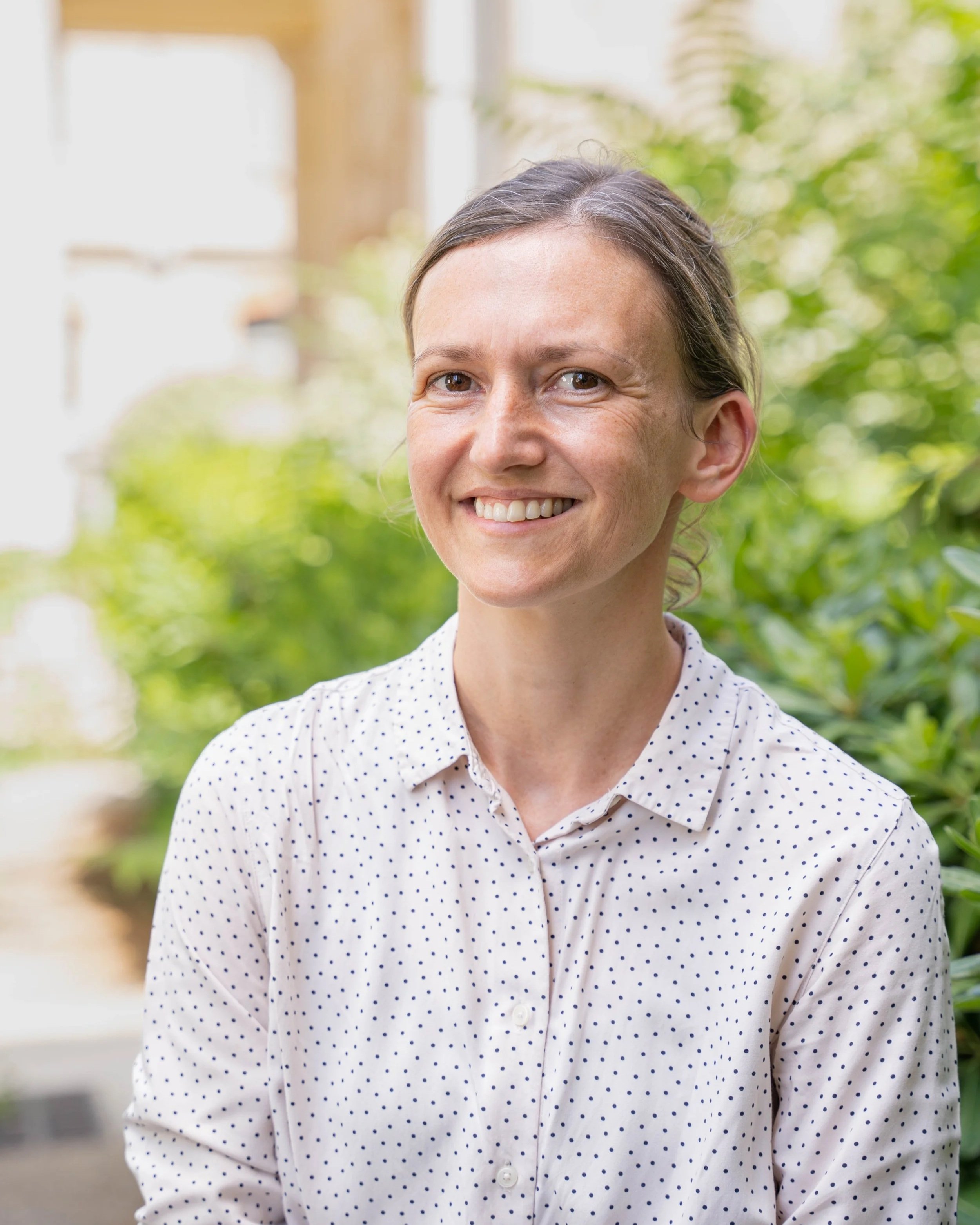
Dr. Agustina Alaimo
Independent Investigator, National Scientific and Technical Research Council Institute (CONICET) in Argentina
Postdoctoral fellow, CONICET
PhD, University of Buenos Aires
From a young age, Dr. Agustina Alaimo knew she wanted to become a scientist. Before discovering neuroscience, she dreamt of becoming a paleontologist, then considered studying atmospheric sciences, then finally chose biology. What never changed was her curiosity about how nature works and her desire to solve unanswered questions. Today, as an independent investigator at the National Scientific and Technical Research Council Institute (CONICET) in Argentina, Agustina is investigating how to protect important cells in the retina from degeneration.
Agustina’s curiosity and love for science led her to pursue a bachelor’s degree in biology at the University of Buenos Aires. During her final years there, she discovered neurobiology, thanks to her endocrinology professor. He not only helped her apply for a CONICET doctoral scholarship, but he also connected Agustina with a laboratory studying a little‑known disease: manganism, a neurodegenerative disorder caused by chronic manganese intoxication, whose symptoms resemble those of Parkinson’s disease. Agustina joined the lab to begin her doctoral studies. While many neuroscientists focus on neurons, Agustina chose to look at astrocytes, glial cells that influence neuronal health, activity, and connectivity. Her doctoral work helped demonstrate that manganese profoundly alters astrocytes, activating cell death pathways related to mitochondrial dysfunction. She also found that antioxidants such as melatonin could protect astrocytes when administered before metal exposure, highlighting the importance of early interventions in neurodegeneration. In addition to making these discoveries, during her PhD, Agustina came to a realization that would shape her entire career: often, to explain a disease, one must study a cell type that others overlook.
Her PhD also took her abroad. Agustina received financial support from the International Brain Research Organization, which allowed her to do a research internship in Cagliari, Italy, in the laboratory of Dr. Micael Morelli. Here she learned new experimental techniques such as intracranial surgeries and attended international conferences. It was at one of these conferences that she came across an idea that would influence her future research direction. While walking through a poster session, she saw a presentation on age‑related macular degeneration. She knew the retinal photoreceptors well, but discovered another important cell type that receives less attention: retinal pigment epithelial (RPE) cells. RPE cells form an essential barrier between the bloodstream and the neurons in the retina, nourish photoreceptors, recycle chemicals needed for vision, and contribute to vision clarity by absorbing extra light. When RPE cells begin to deteriorate, photoreceptors die and central vision can be irreversibly lost. That poster stayed in the back of Agustina’s mind as she continued her career.
After finishing her PhD, Agustina started a postdoc at CONICET. She began a project on amyotrophic lateral sclerosis (ALS), a devastating, fatal disease in which the neurons controlling muscle movement degenerate. This phase coincided with a difficult personal time for Agustina. She was presenting with symptoms that her doctors thought might be a sign of multiple sclerosis. Her symptoms were ultimately linked to a benign tumor, but the traumatic experience left her looking for a fresh start. Her mind drifted back to that poster, RPE cells, and their important roles in maintaining the health of the retina.
Today, as an independent researcher at CONICET at the University of Buenos Aires, Agustina studies how to protect the RPE before irreversible damage occurs. Her laboratory investigates bioactive compounds found in foods and plants—such as resveratrol, quercetin, betanin, and cannabidiol—to determine whether their antioxidant and anti-inflammatory properties can delay degenerative processes. Her group also explores how viruses like Zika use the RPE as an entry point into the eye and evaluates whether some natural molecules could limit viral infection.
While Agustina has had a successful career, it has not always been easy. The challenges, however, have led to important lessons. Resource shortages, limits on acquiring laboratory equipment, and funding uncertainty are part of the daily reality for many laboratories in Argentina and Latin America. Nevertheless, Agustina emphasizes that these circumstances strengthen collaborative networks among researchers, driving interdisciplinary projects and the sharing of infrastructure and knowledge among groups across the country.
Another important lesson has come from difficult experiences with some mentors. Rather than discouraging her, however, those situations shaped the type of scientist and mentor she wanted to become. As a student director, she strives to foster independence, listen to new ideas, and create an environment where the growth of young generations is a source of pride rather than competition. While building her own lab, she continues to draw inspiration from colleagues who extended a hand at key moments in her career and who represent the mentorship model she hopes to emulate.
Looking back, it is clear that Agustina’s trajectory is not defined by a single experimental model or a single disease. It is defined by a constant question: what are we overlooking? From astrocytes to the retinal pigment epithelium, her career demonstrates that major scientific advances often begin when someone decides to look at what others have ignored.
Find out more about Agustina and her lab’s research here.
Listen to Nancy’s full interview with Agustina on July 28, 2026 below!